

Multifocal Intraocular Lens Treatment: Lenses Supporting Near and Distance Vision
Multifocal intraocular lenses are designed to support clear vision at both near and distance ranges. In cases involving cataract or age-related near vision changes (presbyopia), this lens option may help reduce dependence on glasses and support a more comfortable visual experience in daily life.
15,000+ Successful Eye Surgeries
Private Insurance Accepted
20+ Years of Experience

What Is a Multifocal Intraocular Lens?
Multifocal intraocular lenses are specially designed lenses used after cataract surgery or in cases of age-related near vision changes (presbyopia), with the aim of supporting clear vision at both near and distance ranges. These lenses replace the natural crystalline lens and are permanently implanted inside the eye.
Multifocal lenses contain optical zones or concentric rings that allow focusing at different distances. Through this optical design, the visual system can adapt to near and distance vision simultaneously. As a result, daily activities such as reading, computer use, or driving may be performed with reduced reliance on glasses.
How Do Multifocal Lenses Differ from Monofocal Lenses?
Monofocal intraocular lenses are designed to focus at a single distance, most commonly for distance vision. With monofocal lenses, additional reading glasses are typically required for near tasks.
Multifocal lenses, on the other hand, are designed with multiple focal points. This structure allows support for both near and distance vision without the need to switch between different glasses.
In summary:
- Monofocal lenses: Single focus (usually distance); reading glasses often required
- Multifocal lenses: Multiple focal points; near and distance vision supported
- Visual range: Monofocal lenses provide clarity at one distance, while multifocal lenses aim to offer clarity across multiple distances
In Which Situations Are Multifocal Lenses Considered?
Multifocal intraocular lens treatment may be considered for individuals seeking improved visual range and reduced dependence on glasses. However, suitability varies, and a detailed ophthalmic evaluation is required before making a decision.
Common situations where multifocal lenses may be considered include:
After Cataract Surgery
Cataract is a common condition in which the natural lens of the eye becomes cloudy, leading to blurred vision. During cataract surgery, the clouded lens is removed and replaced with an artificial intraocular lens. In cases where clear vision at both near and distance ranges is desired, multifocal lenses may be considered as an alternative option.
This approach allows not only the treatment of cataract but also the potential for broader visual comfort in daily life.
Presbyopia (Age-Related Near Vision Changes)
Presbyopia typically develops after the age of 40 due to reduced flexibility of the natural lens, resulting in difficulty with near tasks. While reading glasses provide a temporary solution, multifocal intraocular lenses represent a long-term approach that may reduce the need for additional visual aids.
This option is often evaluated in individuals who prefer to minimize the use of glasses and maintain an active lifestyle.
Situations Requiring Clear Vision at Multiple Distances
Certain professions and daily activities involve frequent transitions between near and distance vision, such as teaching, driving, architectural work, or extended screen use. In such cases, multifocal lenses may help provide smoother visual transitions across different distances.
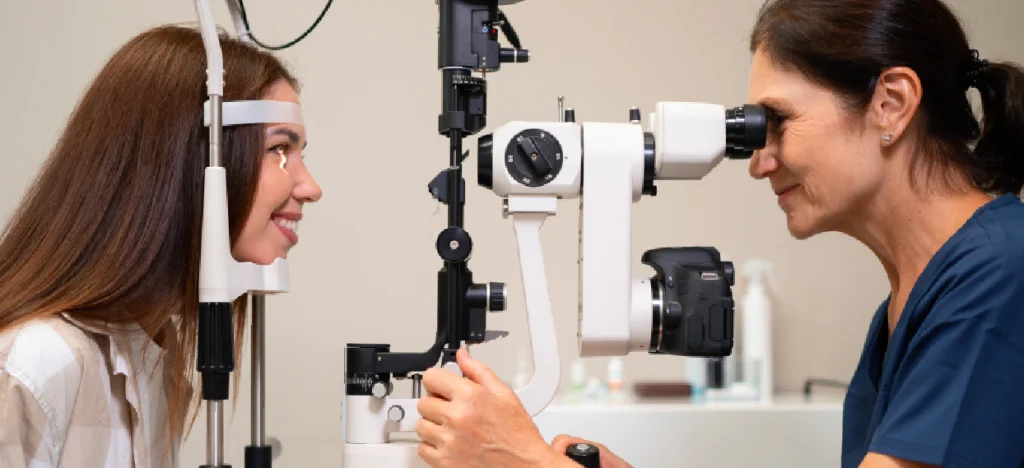
How Is Multifocal Intraocular Lens Treatment Performed?
In multifocal intraocular lens treatment, the natural lens that has lost its clarity is removed and replaced with a specially designed artificial lens that supports both near and distance vision.
The procedure is typically performed under local (topical) anesthesia using eye drops and is generally painless. The surgical process is relatively short, usually lasting approximately 15–20 minutes per eye.
Hospital admission is usually not required, and discharge on the same day is common. Following the procedure, a short recovery period supported by prescribed eye drops is expected before a gradual return to daily activities. Postoperative care instructions are provided in detail by the ophthalmologist.
The choice of lens type and surgical planning is determined individually, making preoperative examination and expert evaluation essential.
What Are the Potential Advantages of Multifocal Intraocular Lens Treatment?
Multifocal intraocular lens treatment is designed not only to address visual limitations but also to support overall visual comfort and daily functionality.
Potential advantages may include:
- Reduced dependence on glasses: Multifocal lenses may decrease the need for separate glasses for near and distance tasks.
- Support for multiple visual ranges: The optical design allows clarity at more than one distance.
- Short recovery period: The procedure is typically completed on the same day, with many individuals resuming daily routines within a short time.
- Improved visual comfort in daily life: Activities such as reading, working on a computer, or outdoor tasks may be performed more comfortably.
Who May Not Be Considered Suitable for Multifocal Lenses?
Although multifocal lenses offer advantages for many individuals, they may not be suitable in all cases. Suitability is determined through a comprehensive eye examination.
Situations where multifocal lenses may not be recommended include:
- Retinal or macular conditions: Disorders affecting the retina may limit the effectiveness of multifocal optics.
- High levels of astigmatism: In such cases, standard multifocal lenses may not provide optimal clarity, and alternative lens designs may be required.
- Neurological or visual adaptation challenges: Some individuals may experience difficulty adapting to multifocal visual systems, particularly in the presence of certain neurological conditions.
Recovery Process and Post-Treatment Considerations
The recovery period following multifocal intraocular lens treatment is generally smooth, but adherence to postoperative guidance is important.
- Temporary visual effects such as mild blurriness, light reflections, or visual fluctuations may occur during the adaptation phase and typically decrease over time.
- Prescribed antibiotic and anti-inflammatory eye drops should be used as directed to support healing and reduce infection risk.
- Eye rubbing, exposure to unclean environments, and swimming should be avoided during the initial recovery period.
- Heavy lifting or sudden movements may be limited in the early postoperative phase.
- Follow-up examinations at scheduled intervals are essential to monitor healing and lens positioning.
Multifocal intraocular lens treatment may support clearer vision at both near and distance ranges and contribute to visual comfort in daily life.
For more detailed information about multifocal lenses and to request a professional pre-evaluation appointment, contact with the clinic can be arranged through official communication channels.