

A Modern Treatment Approach: Cataract Surgery with the Phaco Method
Cataract treatment with Phaco Method is performed by removing the clouded natural lens of the eye and replacing it with an artificial intraocular lens. This modern surgical technique aims to improve visual clarity and support a more comfortable daily visual experience.
15,000+ Successful Eye Surgeries
Private Insurance Accepted
20+ Years of Experience

What Is Cataract Treatment with the Phaco Technique?
Cataract treatment using the phaco technique is one of the most widely used and well-established modern surgical approaches. Its medical term is phacoemulsification.
The core principle of this method is the fragmentation of the eye’s natural lens—once it has lost its transparency—using ultrasonic energy, followed by the placement of an artificial intraocular lens inside the eye.
What Does Phacoemulsification Mean?
The term phacoemulsification originates from Latin and refers to “breaking the lens into a fluid-like form.” During the procedure, a specialized device uses ultrasonic vibrations to divide the cloudy lens into very small fragments, which are simultaneously removed from the eye.
Because this process is performed through a very small incision, large surgical cuts are not required. This characteristic is associated with a shorter healing period compared with older techniques.
How Does It Differ from Traditional Methods?
In conventional cataract surgery, the lens is removed through a relatively larger incision. In contrast, the phaco technique allows the procedure to be performed through much smaller openings, often without the need for sutures. As a result:
- The recovery period may be shorter
- The risk of infection may be reduced
- A return to daily activities may occur sooner, depending on individual recovery
What Is the Aim of the Phaco Technique?
The primary goal of this method is to safely remove the lens that has lost its clarity due to cataract formation and replace it with an artificial intraocular lens designed to support clearer vision.
Beyond visual improvement, the approach also aims to support a comfortable, controlled, and efficient recovery process.
How Is Cataract Surgery with the Phaco Technique Performed?
Phaco cataract surgery is commonly carried out as an outpatient procedure and is generally considered comfortable for the patient. Before surgery, a detailed eye examination is performed to assess ocular structure and to determine the most appropriate type of intraocular lens.
Local anesthesia is typically applied in the form of eye drops. This allows the procedure to be completed without pain and without the need for general anesthesia.
During surgery, the clouded natural lens is fragmented using ultrasonic vibrations and removed. This step is known as phacoemulsification.
Once the lens material is cleared, an artificial intraocular lens (IOL), selected according to visual requirements, is placed inside the eye. This lens is designed to remain permanently and to replace the function of the natural lens.
The procedure usually takes 10–20 minutes. Discharge on the same day is common, after which postoperative eye drops are used as part of the recovery plan.oyu göz içinde kalacak şekilde tasarlanmıştır ve görme fonksiyonunu eski haline getirmeyi amaçlar.
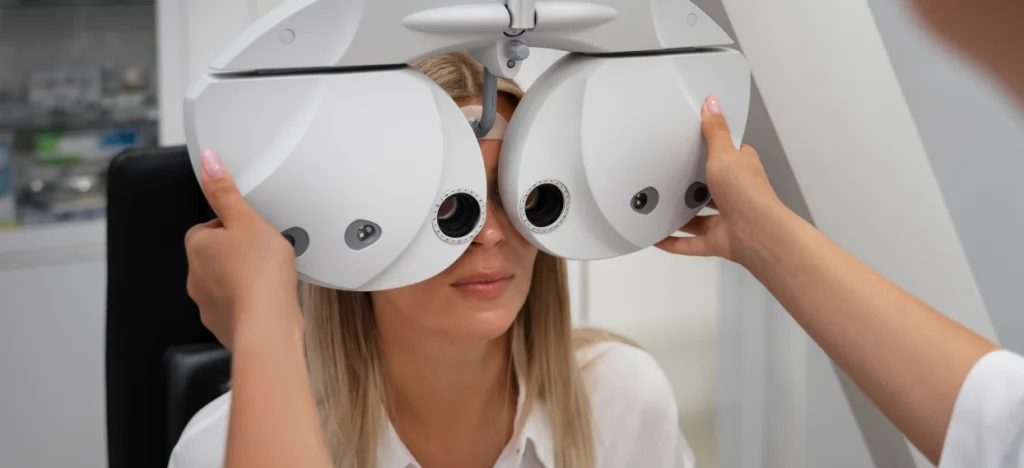
Intraocular Lens Selection in Phaco Cataract Surgery
During phaco cataract surgery, the natural lens is replaced with an intraocular lens (IOL). These lenses are intended for long-term placement and aim to support visual function.
Why Is Lens Selection Important?
Each eye has unique anatomical characteristics and visual priorities. Lens selection is therefore not limited to restoring clarity but also considers lifestyle needs and visual expectations. Some individuals prioritize distance vision, while others may prefer reduced dependence on glasses at multiple distances.
Common Types of Intraocular Lenses
- Monofocal Lenses
The most commonly used option, typically optimized for distance vision. Reading glasses may still be needed for near tasks. - Multifocal Lenses
Designed to support both near and distance vision, potentially reducing reliance on glasses. Suitability varies by case. - Toric Lenses
Used when astigmatism is present, helping correct both cataract-related clouding and corneal irregularity. - Trifocal Lenses
Advanced lenses intended to support near, intermediate, and distance vision more evenly. Often considered for individuals seeking greater visual independence across multiple distances.
Advantages of Cataract Treatment with the Phaco Technique
The phaco technique is among the most commonly preferred cataract surgery methods today. Short procedure time, a relatively comfortable recovery, and early visual improvement are frequently cited advantages.
Because large incisions are not required, sutures are often unnecessary, which may contribute to faster tissue healing.
With modern technology and controlled surgical techniques, the risk of infection is generally low, and the likelihood of damage to surrounding ocular structures is minimized.
Visual clarity often begins to improve early in the postoperative period, and many individuals resume routine activities within a few days, depending on recovery.
Recovery After Phaco Cataract Surgery
Recovery following phaco cataract surgery is typically rapid, but certain precautions support a healthy healing process.
- Mild blurred vision or light sensitivity may occur in the early days and often resolves gradually.
- Prescribed antibiotic and anti-inflammatory eye drops are important for reducing infection risk and supporting healing and should be used as directed.
- Rubbing the eye or applying pressure during the early weeks may increase the risk of complications and should be avoided.
- Care should be taken to prevent water from entering the eye during washing or showering. Protective eyewear or an eye shield may be recommended when appropriate.
- Scheduled follow-up visits are important for monitoring healing and lens positioning. Any sudden visual change, pain, or marked light sensitivity should be evaluated promptly.
Is the Phaco Technique Suitable for Everyone?
While the phaco technique is considered a safe and effective option for many cases, it may not be suitable in every situation. Candidacy depends on overall eye health, cataract stage, and the presence of other ocular conditions.
Advanced Cataracts
When cataracts are very advanced and the lens has become extremely dense, phacoemulsification may be technically more challenging. Alternative surgical approaches may be considered in such cases.
Coexisting Eye Conditions
Conditions such as retinal disease, corneal disorders, or glaucoma may influence surgical planning. In these situations, the phaco technique may require modification or combination with other approaches.
Anatomical Considerations
Factors such as corneal thickness and intraocular space can affect suitability. For this reason, individual evaluation by an eye care specialist is essential.
Phaco cataract surgery is a commonly used surgical approach for treating cataract-related lens clouding. In appropriately selected cases, it may support clearer vision and functional visual improvement.
For further information and a specialist evaluation, contact with the clinic can be arranged through official communication channels.