Is a Glasses-Free Life Possible? Laser Vision Correction Treatments
This article reviews the most commonly used laser vision treatment methods, including their application techniques, key advantages, and general suitability criteria. It is intended as an informative guide for those exploring whether reducing reliance on glasses or contact lenses may be an appropriate option within a clinical evaluation framework.

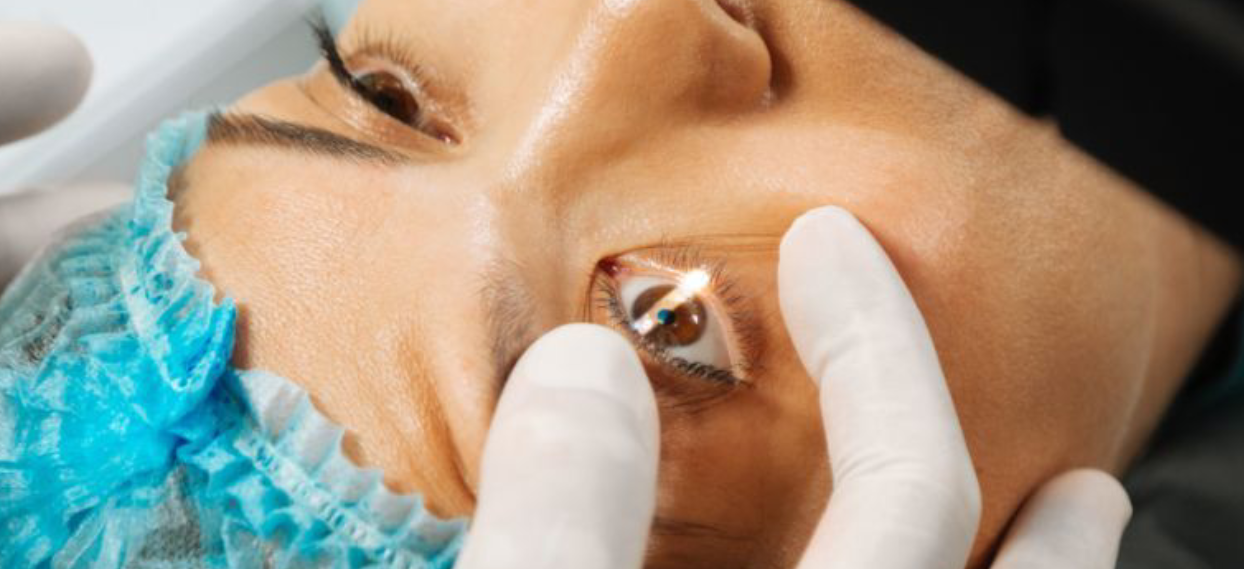
Using glasses in daily life can sometimes feel restrictive, especially for people with a busy routine or an active lifestyle. While glasses and contact lenses help provide clear vision, they may affect comfort for some individuals.
In appropriately selected cases, laser vision correction—often referred to as laser eye surgery—may help improve visual comfort by reducing refractive errors. Through these procedures, refractive conditions such as myopia, hyperopia, and astigmatism, which directly influence quality of life, can be addressed on a long-term basis.
What Is Laser Vision Correction and Why Is It Performed?
Laser vision correction is a procedure that involves reshaping the cornea using advanced laser technologies to manage refractive errors. The cornea, the eye’s outermost layer, plays a key role in focusing light onto the retina. By precisely reshaping the cornea, the goal is to allow light to focus more accurately, supporting clearer vision without reliance on glasses or contact lenses.
In Which Conditions Is It Considered?
- Myopia (nearsightedness): When the eye is relatively longer from front to back, light focuses in front of the retina. Laser treatment thins specific corneal areas to shift the focal point back onto the retina.
- Hyperopia (farsightedness): When the eye is relatively shorter, light focuses behind the retina. Laser treatment increases corneal curvature to help balance this focus.
- Astigmatism: When the corneal surface is irregular or oval, vision can appear blurred or distorted. Laser treatment aims to create a more symmetrical corneal shape to support clearer vision.
What Is the Aim of Laser Vision Correction in Suitable Candidates?
For some individuals, long-term use of glasses or contact lenses may gradually reduce comfort. Those with an active lifestyle, visual comfort priorities, or aesthetic preferences may consider laser vision correction as an alternative.
Common goals include:
- Reducing or eliminating dependence on glasses or contact lenses in daily life
- Feeling more comfortable during sports, driving, or work activities
- Minimizing discomfort related to contact lens use, such as dryness or irritation
It is important to note that suitability depends on medical criteria rather than preference alone. Factors such as corneal thickness, eye anatomy, and overall ocular health must be assessed by an eye care specialist.e genel göz sağlığı gibi kriterlere göre uzman hekim tarafından belirlenmelidir.

Who May Be Considered a Suitable Candidate?
Laser vision correction is a surgical approach intended to reduce or eliminate refractive errors, but not every eye structure or prescription is suitable. A comprehensive evaluation is essential before any decision is made.
Candidates are generally considered based on the following criteria:
- Being over 18 years of age, with a stable prescription for at least 1–2 years
- Having adequate corneal thickness, as the procedure directly involves corneal tissue
- A healthy and regular corneal structure, assessed through corneal mapping
- No active eye conditions such as keratoconus, advanced dry eye, or uncontrolled glaucoma
- Not being pregnant or breastfeeding, as hormonal changes may temporarily affect vision
- Good overall health, since certain systemic conditions can influence healing
Because every individual’s eyes and expectations differ, a detailed eye examination—including advanced imaging and measurements—is essential to determine suitability.
Laser Vision Correction Techniques
Laser vision correction is an umbrella term covering several techniques, each with different technologies, application methods, and recovery characteristics.
PRK (Photorefractive Keratectomy)
One of the earliest laser vision correction methods. The corneal surface layer (epithelium) is gently removed, and excimer laser reshapes the underlying tissue.
Typically considered for:
- Thinner corneas
- Individuals at higher risk of eye trauma
- Those who prefer surface-based techniques without a corneal flap
Trans-PRK (No-Touch Laser)
An advanced, contact-free variation of PRK. Both epithelial removal and corneal reshaping are performed with the laser in a single step.
Typically considered for:
- Individuals suitable for PRK seeking a more streamlined process
- Thinner corneas
- Those who prefer minimal physical contact with the eye
LASIK
One of the most widely known techniques. A thin corneal flap is created, laser reshaping is performed underneath, and the flap is repositioned.
Typically considered for:
- Adequate corneal thickness
- Stable refractive errors
- Preference for faster visual recovery
Femto-LASIK
Similar to LASIK, but the corneal flap is created using a femtosecond laser rather than a mechanical instrument, allowing for higher precision.
Typically considered for:
- Individuals eligible for LASIK seeking enhanced precision
- Those who prefer blade-free flap creation
SMILE (Small Incision Lenticule Extraction)
A minimally invasive, flap-free technique. A small piece of corneal tissue (lenticule) is created and removed through a tiny incision.
Typically considered for:
- Moderate to high myopia and astigmatism
- Preference for a flap-free approach
- Desire to preserve corneal strength and potentially reduce dry eye risk
Benefits and Points to Consider
Laser vision correction may offer greater freedom and comfort for people who find glasses or contact lenses limiting. However, it is a medical decision that requires careful evaluation.
Potential Benefits
- Reduced dependence on glasses or contact lenses in suitable candidates
- Improved comfort during sports, work, and daily activities
- Aesthetic and psychological benefits for those who prefer not to wear glasses
- An alternative for individuals who cannot tolerate contact lenses
Important Considerations
- Not suitable for everyone; detailed eye assessments are essential
- Temporary effects such as dry eye or light sensitivity may occur, especially in the early period
- Complete elimination of prescription cannot be guaranteed in all cases
- As with any surgical procedure, laser vision correction carries potential risks and should be performed by experienced specialists
Laser vision correction should be approached as a personalized medical decision, guided by professional evaluation and realistic expectations, rather than solely as a lifestyle choice.