Are Cataract Surgery and Refractive Lens Exchange the Same?
The terms cataract surgery and intraocular lens surgery are often confused. However, Refractive Lens Exchange (RLE) is a planned procedure performed before cataract development. This article explains in which situations the natural eye lens may be replaced, which types of intraocular lenses are considered for different visual needs, and the key differences between these two distinct procedures.

Inside the eye, there is a natural lens that plays a key role in clear vision by focusing incoming light onto the retina. Over time, this natural lens may lose its transparency and become cloudy. In some cases, even before clouding occurs, the lens may be replaced to reduce dependence on glasses or contact lenses.
At this point, terms such as cataract surgery and intraocular lens replacement are often mentioned together and may be confused with one another. Although both procedures involve replacing the eye’s natural lens with an artificial intraocular lens, their purposes and clinical indications are different.
What Is Cataract Surgery?
The natural lens of the eye is responsible for bending light and forming a clear image on the retina. When this lens loses its transparency, the condition is known as cataract. Cataracts most commonly develop with aging, but they may also occur earlier due to trauma, certain systemic conditions, or long-term use of corticosteroid medications.
The most common symptom of cataract is gradually increasing blurred vision, often described as looking through a foggy or frosted window. Additional changes may include light sensitivity, glare at night, and reduced color contrast.
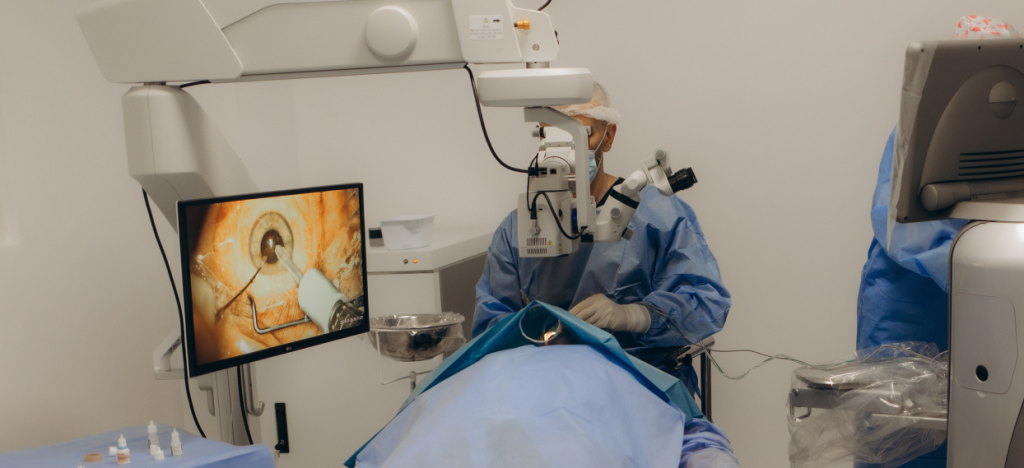
Cataract surgery is performed by removing the clouded natural lens using microsurgical techniques and replacing it with an artificial intraocular lens (IOL). The implanted lens remains in the eye permanently and restores the eye’s focusing function. While the primary goal is to treat cataract-related clouding, the procedure may also support improved visual quality and reduced reliance on glasses, depending on the selected lens type.
What Is Intraocular Lens Surgery?
Refractive Lens Exchange (RLE), commonly referred to as intraocular lens surgery, is a planned procedure performed to reduce dependence on glasses or contact lenses—even when no cataract is present.
This procedure is generally considered for individuals over the age of 40 who do not have cataracts but have refractive errors such as high myopia, hyperopia, or presbyopia. As in cataract surgery, the eye’s natural lens is removed and replaced with an artificial intraocular lens selected according to visual needs.
Although the surgical technique is similar to cataract surgery, the purpose differs. Cataract surgery aims to remove a cloudy lens, whereas refractive lens exchange focuses on improving visual performance and reducing refractive dependence. It is often considered an alternative for individuals who are not suitable candidates for laser vision correction.
What Is Refractive Lens Exchange (RLE)?
Is it possible to replace the eye’s lens without cataract?
Yes. Refractive Lens Exchange (RLE) can be performed even when the natural lens is still clear. In this procedure, the transparent lens is replaced to enhance visual quality or reduce the need for glasses. It is most commonly considered for individuals over 40 who are not suitable for laser procedures or who have high refractive errors.
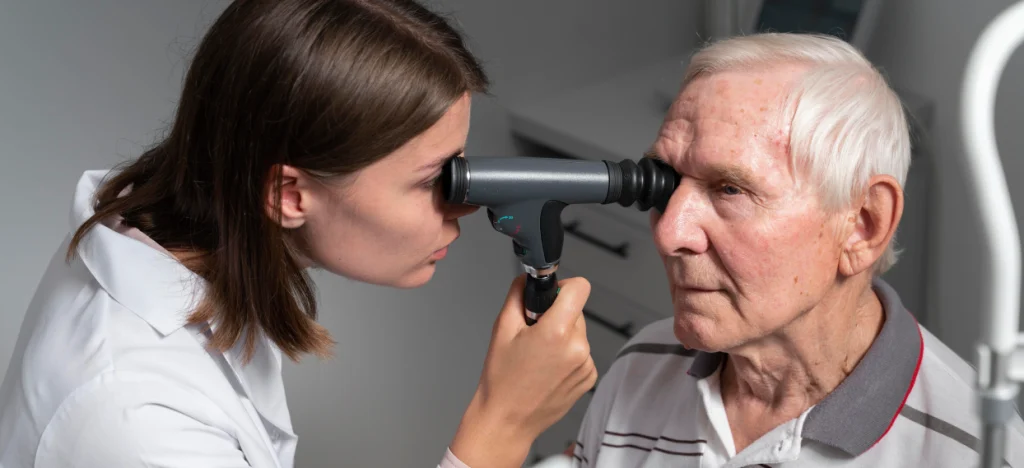
While the steps of RLE closely resemble cataract surgery, the key distinction lies in the indication. The lens is replaced not because of clouding, but to support visual comfort and long-term refractive correction. Detailed eye examinations and precise measurements are essential in determining suitability and selecting the appropriate lens type.
Types of Intraocular Lenses and Selection
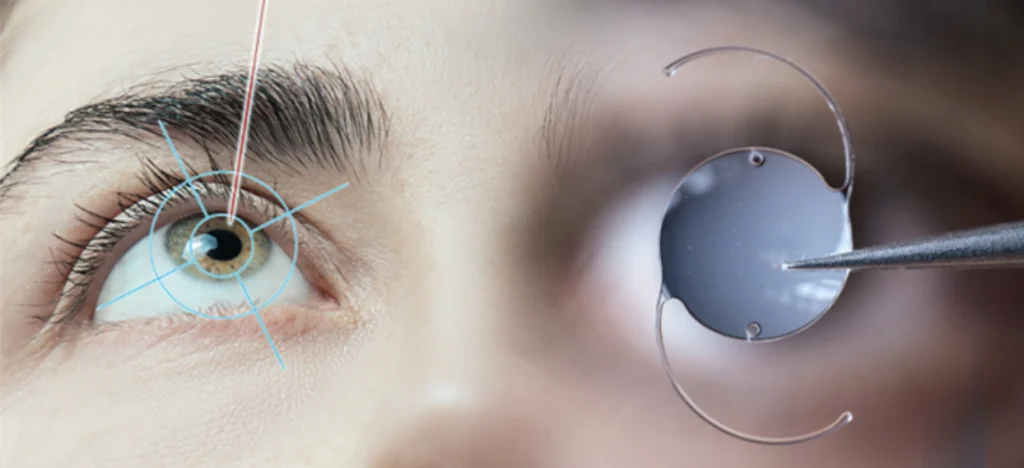
Choosing the appropriate intraocular lens is one of the most important steps in both cataract surgery and refractive lens exchange. Each lens type is designed to address different visual needs and lifestyle expectations. Common lens options include:
Monofocal Lenses (Single-focus)
- Typically provide clear distance vision
- Near vision usually requires reading glasses
- Often selected by individuals comfortable with using glasses for close tasks
Multifocal / Trifocal Lenses
- Designed to support distance, intermediate (such as computer use), and near vision
- May reduce dependence on glasses across multiple distances
- Commonly considered in age-related near vision changes, with or without cataract
Toric Lenses
- Specifically designed to correct astigmatism
- Available in monofocal, multifocal, and trifocal designs
EDOF (Extended Depth of Focus) Lenses
- Provide smoother vision transitions, particularly for distance and intermediate ranges
- May be preferred by individuals sensitive to visual disturbances such as glare
- Low-strength reading glasses may still be needed for near tasks
Key Differences in Purpose
Cataract surgery and refractive lens exchange share a similar surgical approach: the natural lens is removed and replaced with an artificial intraocular lens. However, their objectives are different.
- Cataract surgery is performed to remove a clouded lens that affects visual clarity.
- Refractive lens exchange is performed to address refractive errors and reduce dependence on corrective eyewear.
In both cases, lens selection plays a central role in overall outcomes. For this reason, a comprehensive eye examination and individualized planning are essential to determine the most appropriate approach based on eye structure, visual goals, and daily needs.