6 Key Points You Should Know About Intracorneal Ring Treatment for Keratoconus
Intracorneal Ring Treatment for Keratoconus is a modern approach designed to help reduce vision disturbances associated with corneal thinning and irregularity. This method involves placing thin ring implants within the cornea, with the aim of supporting a more regular corneal shape and improving overall visual quality.


Keratoconus is a progressive eye condition characterized by thinning of the cornea and forward protrusion of its structure. This process may lead to a decline in visual quality and can make daily activities more challenging.
Among the treatment approaches developed for this condition, Intracorneal Ring Treatment is considered an important option aimed at supporting corneal structure and improving visual function in selected cases.
To learn more about Intracorneal Ring Treatment for keratoconus, including how the procedure is performed, which cases may be considered suitable, and how the treatment process typically progresses, you can continue reading below.
What Is Keratoconus?
Keratoconus is a progressive eye condition in which the cornea—the transparent front layer of the eye—becomes thinner and gradually protrudes forward. Under normal conditions, the cornea has a dome-shaped structure that focuses incoming light onto the retina, enabling clear vision.
When keratoconus develops, the corneal structure becomes thinner and irregular, preventing light from being refracted properly. As a result, visual disturbances such as blurred vision, light scattering, and difficulty with night vision may occur.
Key structural changes associated with keratoconus include:
- Structural weakening of the cornea
- Gradual thinning and forward protrusion
- Inability to focus images sharply on the retina
These changes can make the use of glasses or contact lenses more challenging and may affect daily visual comfort.
Keratoconus often begins at a young age and may progress over time. With early diagnosis, treatment strategies aimed at slowing disease progression can be planned more effectively. Regular eye examinations play an essential role in detecting corneal changes at an early stage.
In individuals diagnosed with keratoconus, different treatment options may be considered depending on corneal structure and disease stage. One of these options is Intracorneal Ring Treatment, which is designed to support corneal shape.n insufficient.
What Is Intracorneal Ring Treatment for Keratoconus?
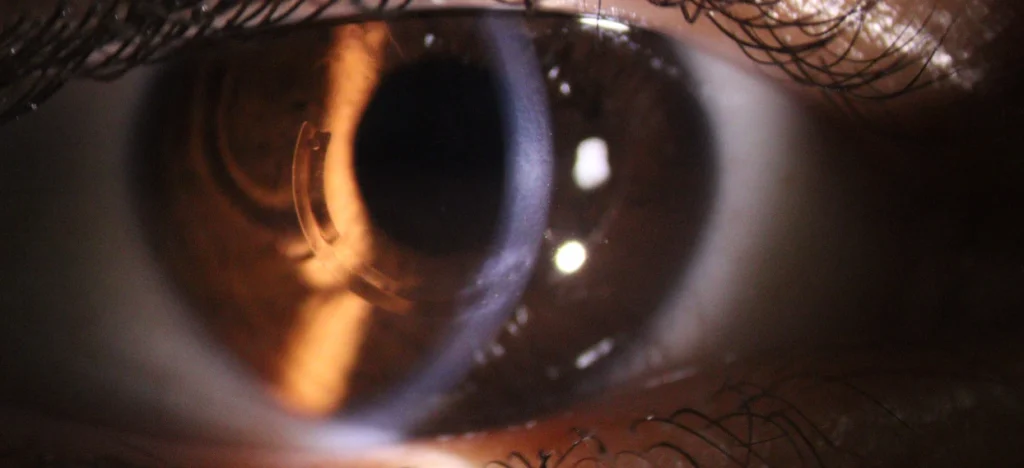
Intracorneal Ring Treatment is one of the modern treatment approaches used in keratoconus cases characterized by corneal thinning and shape irregularity. In this procedure, thin implant segments are placed within the corneal tissue with the aim of reshaping and supporting the cornea.
The implants used in this treatment are known as Intrastromal Corneal Ring Segments (ICRS). These semi-circular, transparent segments are carefully inserted into the cornea. Their thickness and positioning are individually determined based on corneal structure and disease stage.
The primary goals of Intracorneal Ring Treatment include:
- Reducing forward protrusion of the cornea
- Improving corneal surface regularity
- Supporting visual quality
- Contributing to more comfortable use of glasses or contact lenses in some cases
Op. Dr. Murat Ün emphasizes that intracorneal ring treatment is not intended to completely stop the progression of keratoconus, but rather to help improve corneal shape and visual comfort. Therefore, treatment decisions are made on an individual basis following detailed examinations such as corneal topography and advanced diagnostic tests.
Which Patients May Be Considered for Intracorneal Ring Treatment?
Intracorneal Ring Treatment is not suitable for every individual with keratoconus. Eligibility is determined based on corneal characteristics, disease stage, and detailed diagnostic findings.
1. Early and Moderate-Stage Keratoconus
This treatment is generally considered in early to moderate stages of keratoconus. At these stages, sufficient corneal thickness and transparency are usually preserved, allowing safe placement of the ring segments.
2. Limited Visual Benefit from Glasses or Contact Lenses
As keratoconus progresses, visual correction achieved with glasses or contact lenses may become inadequate in some cases. Intracorneal Ring Treatment may help improve corneal regularity and support visual comfort under these circumstances.
3. Adequate Corneal Thickness
A certain level of corneal thickness is required for this procedure. In advanced cases with significant thinning or structural deterioration, this method may not be appropriate. Suitability is determined through detailed tests such as pachymetry and corneal topography.
Recovery Process After Intracorneal Ring Treatment
Following Intracorneal Ring Treatment, protecting the eye during the early recovery period is important for healthy healing. Common post-treatment recommendations may include:
- Avoiding eye rubbing
- Using prescribed eye drops as directed
- Staying away from dusty or smoky environments
- Protecting the eye from trauma
- Wearing sunglasses to reduce light sensitivity
Visual changes may occur after the procedure. Some individuals may notice improvement relatively quickly, while others may experience gradual stabilization over several weeks or months.
Regular follow-up examinations are essential after treatment. During these visits, the following aspects are carefully evaluated:
- Position of the ring implants
- Condition of the corneal surface
- Visual acuity
- Overall healing progress
Consistent monitoring helps ensure proper recovery and allows early detection of potential complications.
Advantages of Intracorneal Ring Treatment
Intracorneal Ring Treatment is considered an important option for supporting corneal shape in appropriately selected cases. While it does not provide a definitive cure or guaranteed outcome, individualized planning may contribute to improved visual comfort and quality of daily life.
Potential advantages include:
- Support for Corneal Shape:
The implanted rings may help reduce corneal protrusion and promote a more regular surface, allowing light to focus more accurately on the retina. - Potential Improvement in Visual Quality:
Reducing corneal irregularity may lead to improved visual clarity in some cases, although results vary. - Facilitation of Contact Lens Use:
A more regular corneal surface may improve contact lens fitting and comfort. - An Alternative Before Advanced Surgery:
When applied before advanced stages, this treatment may serve as an alternative to more invasive surgical procedures for some individuals.
Possible Risks and Side Effects
As with any medical procedure, certain side effects may occur following Intracorneal Ring Treatment. Most are temporary and mild.
Common Temporary Effects
- Mild eye irritation or burning sensation
- Slight redness
- Temporary visual fluctuations or blurriness
- Increased sensitivity to light
These effects usually decrease as healing progresses.
Rare Implant-Related Considerations
In rare cases, issues related to ring positioning may occur, such as implant displacement or localized corneal discomfort. Regular follow-up examinations allow these situations to be identified and managed appropriately.