Corneal Cross-Linking Treatment: A Cross-Linking Approach to Strengthen Corneal Health
Cornea is one of the key structures that helps provide clear vision by bending (refracting) light properly. In some cases, this structure can weaken, and progressive conditions that may reduce visual quality can develop. Corneal Cross-Linking (CXL) is a modern approach used to strengthen corneal tissue, particularly in conditions such as keratoconus, where the cornea may thin and gradually change shape. Learning more about corneal cross-linking, its procedure, recovery period, and overall treatment pathway, can be helpful for understanding the process and timing considerations.


Corneal cross-linking is a treatment approach designed to help slow the progression of structural weakening in the cornea and to improve its biomechanical stability.
Op. Dr. Murat Ün emphasizes that the procedure is planned individually, based on detailed clinical evaluation, and tailored according to corneal structure and overall ocular findings.
What Is Corneal Cross-Linking (CXL)?
Corneal Cross-Linking (CXL) is a scientifically established medical procedure aimed at increasing the structural strength of the cornea. It is commonly considered in progressive corneal conditions such as keratoconus and certain forms of corneal ectasia, where thinning and shape changes may continue over time.
The core principle of the treatment is to reinforce the collagen fibers within the corneal tissue. During the procedure, riboflavin (vitamin B2) eye drops are applied to the cornea, followed by controlled exposure to UV-A light. The interaction between riboflavin and UV-A light promotes the formation of new chemical bonds between collagen fibers, resulting in increased corneal rigidity.
Before CXL is considered, a comprehensive evaluation of corneal health is performed to determine suitability and to personalize the treatment plan.
Pre-Treatment Examinations
To assess corneal structure and overall ocular health, several diagnostic tests are typically performed:
- Visual acuity assessment (with and without correction)
- Refraction testing (with and without cycloplegia)
- Corneal thickness measurement (pachymetry)
- Corneal topography to map surface curvature and detect irregularities
- Fundus examination to evaluate retinal and optic nerve health
After completing these assessments, a comprehensive evaluation is made to determine whether corneal cross-linking is appropriate.
Cross-Linking Techniques
Two main techniques may be considered, depending on corneal thickness, disease progression, and clinical findings:
- Epithelium-off (standard) technique:
The outer epithelial layer of the cornea is removed to enhance riboflavin penetration. - Epithelium-on (transepithelial) technique:
The epithelial layer is preserved, which may offer a more comfortable recovery for some individuals, although riboflavin absorption differs from the standard approach.
The selection of technique is based on individualized clinical evaluation rather than a single standardized method.
When Is Corneal Cross-Linking Considered?
Corneal cross-linking may be evaluated in progressive corneal conditions where structural weakening is observed, including:
- Keratoconus:
A progressive condition characterized by corneal thinning and forward protrusion. When identified early, cross-linking may help slow further progression. - Corneal ectasia:
A rare condition that may develop after certain refractive surgeries, associated with corneal weakening. - Other progressive corneal disorders:
Conditions such as pellucid marginal degeneration may also be evaluated on a case-by-case basis.
Treatment decisions are made by considering disease progression, corneal thickness, and overall ocular health.

Treatment Process and Procedure Steps
Corneal cross-linking is a structured procedure carried out in several stages:
Before the Procedure
A full ophthalmic examination is performed, including:
- Visual acuity testing
- Refraction measurements
- Corneal thickness assessment
- Corneal surface mapping
- Fundus examination
These evaluations help ensure the procedure is planned safely and appropriately.
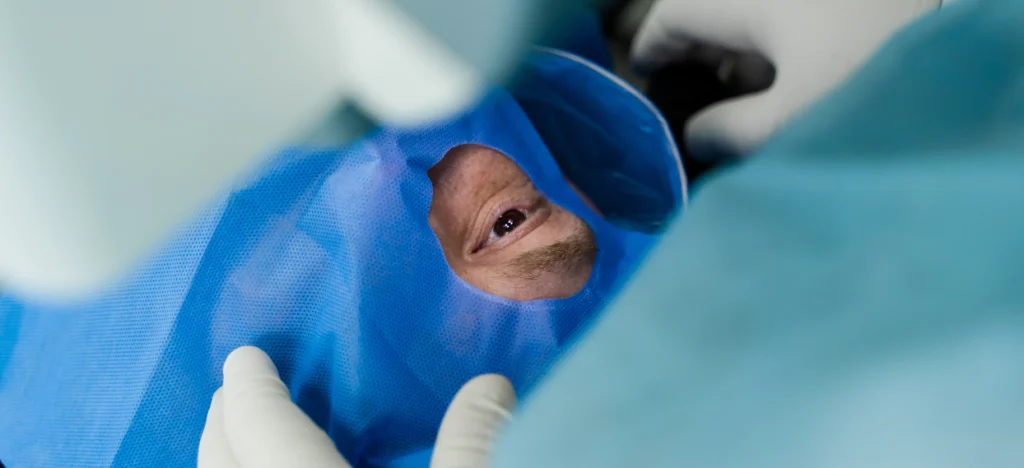
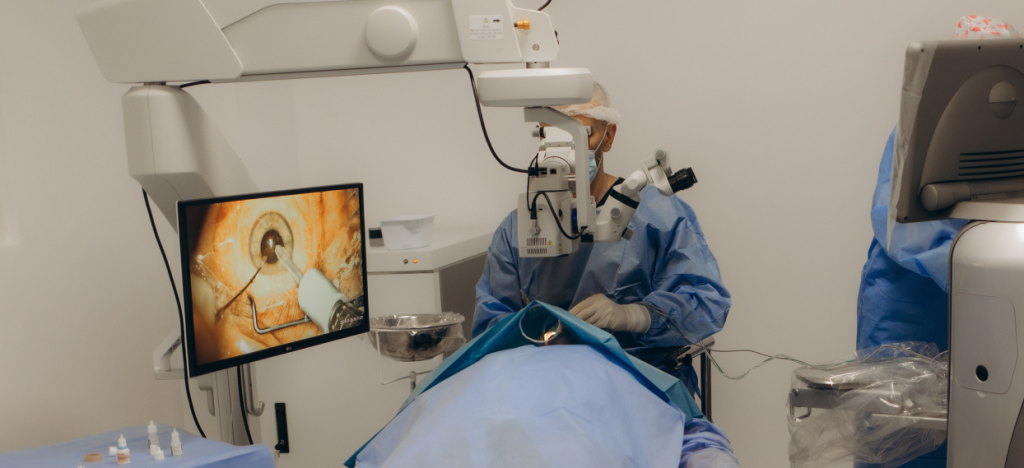
During the Procedure
- Local anesthetic eye drops are applied
- Riboflavin drops are instilled into the cornea
- Controlled UV-A light is applied for a specified duration
- Collagen fibers within the cornea form additional cross-links, increasing tissue strength
The procedure typically takes 30–60 minutes, depending on technique and corneal characteristics. Discomfort during the procedure is generally minimal, though mild pressure or foreign-body sensation may be noticed.
Types of Cross-Linking
- Epi-off: The epithelial layer is removed before riboflavin application.
- Epi-on (transepithelial): The epithelium is preserved and loosened using drops or sponges before riboflavin application.
The choice of method depends on clinical findings and corneal suitability.
After Corneal Cross-Linking Treatment
As with any medical procedure, temporary effects may occur during the healing period. These commonly include:
- Mild burning or stinging sensation
- Temporary blurred vision
- Light sensitivity
- Redness or tearing
These effects usually improve within the first few days. Prescribed eye drops and follow-up visits support a smoother recovery.
Less common considerations may include:
- Corneal infection
- Prolonged healing
- Temporary fluctuations in visual clarity
Regular follow-up examinations are important to monitor corneal healing and detect any early changes.
Post-Procedure Care Recommendations
During the initial recovery period, general precautions may include:
- Avoiding eye rubbing
- Using prescribed eye drops as directed
- Staying away from dusty or smoky environments
- Limiting water contact with the eye during early healing
- Using sunglasses to reduce light sensitivity
Scheduled follow-up visits allow corneal structure and visual status to be monitored over time.
Frequently Asked Questions About Cross-Linking
Is the procedure performed while awake?
The procedure is typically performed with the patient awake under local anesthetic eye drops. Many individuals listen to music or audio during the treatment.
How long does the procedure take?
The full appointment may take approximately 75–90 minutes, including preparation and post-procedure care.
Is the procedure painful?
The procedure itself is generally not painful due to anesthetic drops. Temporary discomfort may occur during epithelial healing.
Should contact lenses be discontinued beforehand?
Rigid contact lenses are usually discontinued weeks before treatment, and lens use may be limited for a period after the procedure, depending on clinical advice.
Who may not be suitable for cross-linking?
In advanced corneal thinning or significant corneal scarring, cross-linking may not be appropriate. Early evaluation plays an important role in treatment planning.
Can cross-linking be combined with other treatments?
In selected cases, cross-linking may be combined with surface laser procedures such as PRK or No-Touch Laser to address refractive components, following careful assessment.den itibaren normal hayatınıza dönebilirsiniz. Tabii bu kişinin vücuduyla alakalı bir durumdur. Bazı insanlar 3 günde kendine gelirken bazıları için bu süre biraz daha fazla olabilir. 7 günlük bir istirahatten sonra ise işe dönülebilir.