

Intracorneal Ring Treatment (Intacs): A Modern Option for Keratoconus and Irregular Astigmatism
Intracorneal ring treatment is a minimally invasive approach used in corneal conditions such as keratoconus and irregular astigmatism. By supporting the corneal structure, it may help improve visual quality and, in selected cases, reduce reliance on glasses or contact lenses.
15,000+ Successful Eye Surgeries
Private Insurance Accepted
20+ Years of Experience

What Is Intracorneal Ring Segment Treatment?
Intracorneal ring segment treatment is a surgical approach that may be considered in conditions where the cornea becomes thinner and its shape changes, such as keratoconus. In this procedure, thin, semi-circular ring segments are placed into the middle layer of the cornea (the stroma) to help reshape the cornea and support visual quality.
In medical literature, these implants are referred to as Intrastromal Corneal Ring Segments (ICRS). One of the most widely recognized ICRS systems is Intacs.
How the Rings Work: Placement and Basic Principle
The ring segments are inserted into small channels created within the cornea, without disturbing the outer corneal surface. By altering corneal curvature—typically by flattening the central cornea—the rings can help improve the alignment of the visual axis and allow light to be refracted more regularly onto the retina.
Following the procedure, the cornea may achieve a more stable shape. In selected cases, visual quality may improve beyond what can be achieved with glasses or contact lenses alone. This approach is often discussed when contact lens wear is difficult or when sufficient visual function cannot be achieved with lenses.
When Is Intracorneal Ring Segment Treatment Considered?
Intracorneal ring segments are most often considered in corneal conditions that distort the corneal shape and interfere with regular light refraction. The main goals are to support corneal stability and improve functional vision where appropriate.
This treatment may be evaluated in situations such as:
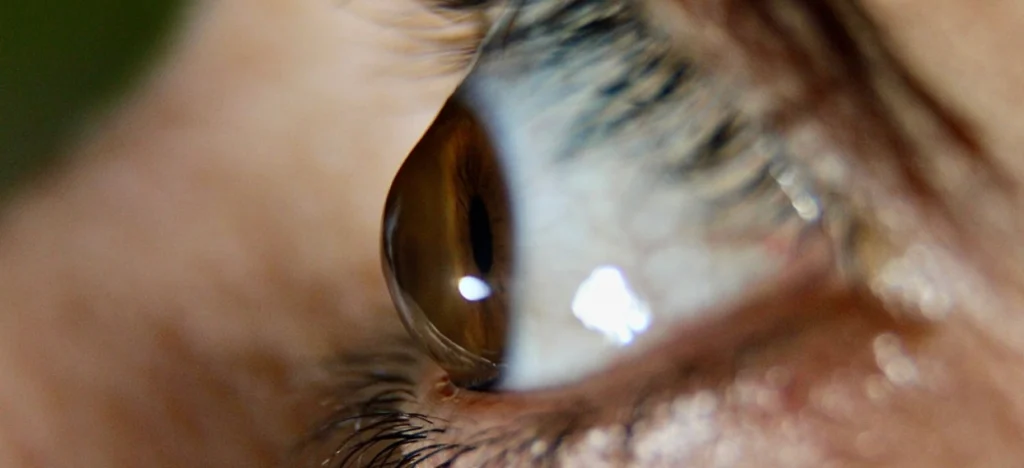
- Keratoconus: A progressive condition where the cornea thins and bulges forward in a cone-like shape, which can lead to optical distortion and light scatter. Ring segments may help partially regularize the corneal shape and support better visual quality.
- Limited benefit from glasses or contact lenses: In some cases, acceptable vision cannot be achieved even with corrective lenses; ICRS may be considered as an additional option.
- Low contact lens tolerance: When contact lens wear causes significant discomfort or is difficult to maintain, ring segments may reduce dependence on lenses for some individuals.
- Adequate corneal thickness and structural suitability: A minimum level of corneal thickness and corneal integrity is needed. For this reason, not every case is a candidate, and suitability should be determined through detailed assessment.
How Is the Intacs Procedure Performed?
Intracorneal ring segment implantation is typically performed as an outpatient procedure. It is commonly done under local anesthesia with anesthetic eye drops, and the procedure often takes about 15–20 minutes.
A typical process may include:
- Topical anesthesia and preparation
The eye is numbed with drops, and sterile preparation is performed. - Creation of the corneal channel
A small intrastromal channel is created using a femtosecond laser or a micro-instrument, depending on the planned technique. - Insertion of the ring segments
The ring segments are placed into the channel. Their presence can alter corneal curvature and support partial flattening/regularization of the cornea. - Early recovery and follow-up
The cornea generally recovers quickly. Visual changes may become more noticeable over the following weeks as healing and adaptation progress.
Potential Advantages of Intracorneal Ring Segments
Intracorneal ring segments are used to support corneal shape in progressive corneal conditions such as keratoconus. Several characteristics are commonly highlighted:
- May improve visual quality
By partially regularizing corneal shape, light may focus more evenly, which can reduce blur and distortion in selected cases. - May support corneal stability
By providing structural support, ICRS may help the cornea maintain a more stable shape. The effect on disease progression varies and should be evaluated case by case. - May reduce dependence on glasses or contact lenses
Some individuals may require less reliance on corrective lenses after the procedure. Complete independence from glasses cannot be assumed and varies between cases. - Adjustable and removable
One of the notable features is reversibility: the segments can be removed or exchanged if needed. This makes the approach more flexible than many permanent surgical options.
Who May Not Be Considered Suitable?
As with any procedure, intracorneal ring segments are not appropriate for every clinical situation. Suitability depends heavily on corneal structure and disease stage, and the decision should be based on detailed examination and measurements.
ICRS may be less suitable in cases such as:
- Insufficient corneal thickness
- Advanced keratoconus
- Significant corneal scarring or reduced corneal clarity
- Certain retinal or optic nerve conditions
Recovery and Key Post-Procedure Considerations
Recovery is often described as relatively quick, but careful postoperative care is important.
- Temporary symptoms such as mild blur, glare, halos, or shadowing can occur in the early period and often lessen over time.
- Prescribed antibiotic and anti-inflammatory eye drops are typically used to support healing and reduce infection risk.
- Eye rubbing and any pressure on the eye should be avoided, especially early on, as it can affect ring positioning.
- Swimming, sauna use, heavy lifting, and intense exercise are commonly postponed for a period recommended by the surgeon.
- Follow-up visits are important for monitoring ring position and visual outcomes. Any unexpected discomfort should be assessed promptly.
Comparing Intracorneal Ring Segments with Other Options
Several approaches can be considered for keratoconus and related corneal irregularities. The preferred option depends on disease stage, corneal thickness, visual needs, and lifestyle factors.
ICRS vs. Corneal Cross-Linking (CXL)
- CXL is primarily aimed at strengthening the cornea to slow or stop progression; visual improvement may be limited.
- ICRS is primarily aimed at improving corneal shape and functional vision.
- In selected cases, both approaches may be used together as part of a staged plan.
ICRS vs. Glasses or Contact Lenses
- Early keratoconus may be managed with glasses or contact lenses.
- When optical correction becomes insufficient or lens tolerance is poor, ICRS can be considered as an additional option.
ICRS vs. Corneal Transplantation (Keratoplasty)
- In advanced cases where other approaches are not suitable or do not provide adequate function, corneal transplantation may be considered.
- ICRS is often discussed as a more conservative, tissue-preserving option that may be evaluated before transplant in appropriate cases.
Are Intracorneal Ring Segments Permanent?
Ring segments can remain in place for many years. A key feature is that the implants are removable and can be repositioned or exchanged when clinically appropriate. However, removal does not guarantee a return to the exact pre-procedure corneal shape, and visual outcomes can change afterward. For this reason, any decision to remove or adjust the segments should be made based on clinical findings and individual circumstances.
Intracorneal ring segments (such as Intacs) are among the options used to support corneal reshaping in conditions like keratoconus.
For more information and a specialist assessment, contact with the clinic can be arranged through official communication channels.