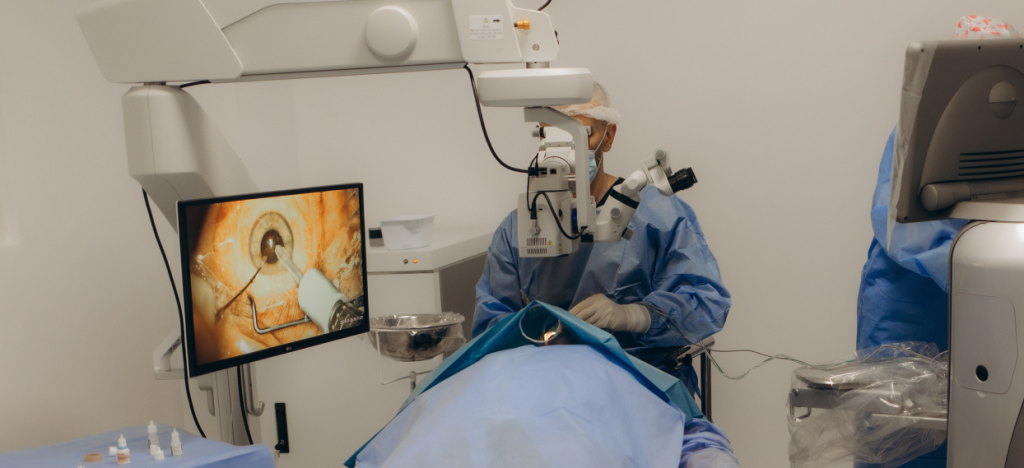
Intraocular Lens Implantation and Treatment Process
Intraocular lens implantation is a modern treatment option for individuals who are not suitable candidates for laser procedures or who have high-degree refractive errors. This method, which may support clear vision in the long term, is often considered by those looking for an alternative to glasses or contact lenses. So, who may be suitable for this approach, what are its potential advantages, and which points should be taken into consideration? You can find all the details in our blog article.


One of the treatment methods frequently used today is intraocular lenses. In individuals with primary refractive errors, the degree of these conditions can be quite high in some cases. Some of these individuals may also not be suitable candidates for laser treatments. For such situations, various alternative techniques have been developed. One of these techniques is the use of intraocular lenses.
Intraocular lenses are specially designed implants developed to enhance visual quality and support clear vision in daily life. Which lens type may be appropriate? From potential benefits to possible risks, this article provides comprehensive information about intraocular lenses.
What Is an Intraocular Lens?
An intraocular lens is an artificial lens implanted inside the eye to replace or support the function of the natural crystalline lens. These lenses help achieve clear vision by allowing light to focus correctly on the retina.
They are most commonly used during cataract surgery, but in certain situations, they may also be considered as an alternative to glasses or contact lenses.
Intraocular lenses can be designed to optimize distance vision, near vision, or both. The most appropriate lens type is determined by the physician after evaluating visual needs and ocular anatomy.
Types of Intraocular Lenses
Intraocular lenses are produced with different characteristics based on visual needs and intended use. The most common types include:
1. Monofocal Lenses
Provide clear vision at a single focal distance, typically distance. They are suitable for individuals who prefer clear distance vision. Glasses are usually required for near tasks.
2. Multifocal Lenses
Support clear vision at both distance and near ranges. In some cases, additional glasses may be needed for intermediate distances, such as computer use.
3. Trifocal Lenses
Offer clear vision at distance, intermediate, and near ranges. With a wide focal range, they aim to provide visual comfort for activities such as reading, computer work, and driving.
4. Toric Lenses
Designed specifically for individuals with astigmatism. They help correct irregular corneal curvature and support clearer vision.
5. EDOF (Extended Depth of Focus) Lenses
These lenses provide an extended depth of focus. They are particularly effective for distance and intermediate vision while also offering satisfactory near vision. Visual phenomena such as halos or glare, which may occur with multifocal lenses, are generally less noticeable with this type.
Lens selection is determined by evaluating ocular structure, visual expectations, and lifestyle factors together. For this reason, a comprehensive eye examination is essential to identify the most suitable lens type.
How Is Intraocular Lens Implantation Performed?
Intraocular lens implantation is typically a short procedure performed using modern surgical techniques. Prior to the procedure, the eye is examined in detail, measurements are taken, and the most appropriate lens type is selected.
During surgery, the existing natural lens is removed and replaced with the selected artificial lens. This is performed under a microscope using precise surgical instruments. The recovery process is generally rapid, allowing a return to daily activities within a short period.

What Are the Advantages of Intraocular Lens Implantation?
Over the past 15 years, intraocular lens implantation has become increasingly widespread worldwide, with high reliability and favorable outcomes. Advances in technology have contributed to both visual quality and ocular safety.
Key advantages include:
- With appropriate lens selection, sharper vision at both distance and near ranges may be achieved.
- Different lens options such as monofocal, multifocal, trifocal, or EDOF can be tailored to individual needs.
- With multifocal and trifocal lenses, dependence on glasses in daily life may be significantly reduced.
- Implanted lenses are designed to maintain consistent performance over many years.
- Treatment planning can be aligned with lifestyle preferences and visual expectations.
Identifying the most suitable lens requires a detailed examination and expert evaluation, helping optimize both visual quality and overall comfort.
What Should Be Considered When Choosing an Intraocular Lens?
One of the most important steps in achieving a successful and comfortable long-term outcome is selecting the appropriate intraocular lens. This decision involves not only technical features but also lifestyle and visual expectations.
- Age and lifestyle: Visual demands at near, intermediate, and distance ranges may vary. For example, individuals who work extensively at a computer may have different needs than those who spend more time outdoors.
- Visual requirements: The choice among monofocal, multifocal, trifocal, or EDOF lenses depends on visual habits and expectations.
- Ocular health history: Previous eye conditions or existing ocular structure play an important role in determining lens suitability.
- Physician recommendation: The most appropriate lens choice should be guided by an eye specialist following a comprehensive examination and individualized assessment.
Selecting the right lens enhances visual comfort both during treatment and in the long term.
In conclusion, intraocular lens selection is not merely a technical decision; it is an important factor that directly affects quality of life. A well-informed choice made in collaboration with a specialist—considering age, lifestyle, visual expectations, and ocular health history—can increase treatment efficiency and long-term satisfaction.
For further information or to evaluate suitable options, contact Op. Dr. Murat Ün to arrange a preliminary assessment.siniz.