

Laser Eye Treatment: Modern Approaches to Vision Correction
Laser eye treatment is a modern and reliable approach used to manage common vision conditions such as myopia, hyperopia, and astigmatism. By reshaping the cornea, this method may help reduce reliance on glasses or contact lenses and offers a comfortable, long-term option for suitable candidates.
15,000+ Successful Eye Surgeries
Private Insurance Accepted
20+ Years of Experience
Types of Laser Eye Treatments
To learn more about the laser eye treatment options available, individual procedure pages can be reviewed. This page also provides an overview of how laser eye treatments are performed and what to expect during the recovery process.
- ReLEx SMILE Laser
- iLASIK
- Presbyopic Laser (Presbyond®)
- Excimer Laser (Femtosecond Laser)
- PRK (No-Touch Laser)
- Phakic Intraocular Lens (ICL)
What Is Laser Eye Treatment and How Does It Work?
Laser eye treatment is based on reshaping the cornea using precise laser energy to improve the way light is focused inside the eye. The cornea plays a key role in directing light toward the retina, and subtle adjustments to its shape can help reduce the effects of common vision conditions such as myopia, hyperopia, and astigmatism.
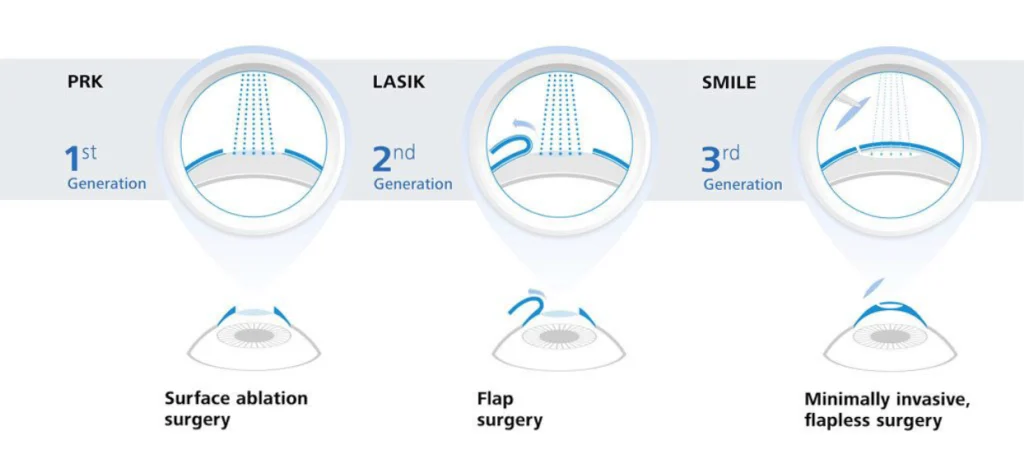
Widely used laser techniques include LASIK, PRK, and SMILE. Each method is planned according to the anatomical characteristics of the eye and performed using advanced medical devices. These procedures aim to support clearer vision by helping light reach the retina in a more accurate way.
Potential Benefits of Laser Eye Treatment
Laser eye treatment is among the modern options considered for managing focusing and clarity issues of the eye. When applied to suitable candidates, these techniques may support daily visual comfort.
Some commonly noted advantages include:
Improved Focusing Performance
Laser treatment may help optimize how light is focused on the retina through controlled corneal reshaping, contributing to clearer vision in appropriate cases.
Reduced Dependence on Glasses or Contact Lenses
Laser eye procedures are often considered as an alternative to long-term use of corrective eyewear, particularly for individuals with active lifestyles.
Long-Term Visual Comfort
Corneal adjustments performed during treatment may provide lasting visual comfort. Outcomes can vary depending on individual eye structure and the healing process.
Short Recovery Time
Because laser eye treatments are minimally invasive, recovery is often relatively quick, allowing a return to daily routines after a short rest period.
Laser Eye Treatment Methods and Options
Laser eye treatment can be performed using different techniques, depending on eye structure, lifestyle needs, and visual requirements. The most appropriate method is determined after a detailed eye examination by an eye care specialist.
Commonly used methods include:
SMILE Laser (ReLEx SMILE)
A minimally invasive technique that reshapes the cornea through a small incision. Reduced tissue disruption may contribute to a comfortable recovery period for selected individuals.
iLASIK (IntraLase LASIK)
One of the most widely performed procedures. A thin corneal flap is created, laser correction is applied, and the flap is repositioned. This approach is customized based on individual eye measurements.
Presbyopic Laser Treatment
Designed for age-related near-vision difficulties, this method aims to support functional vision at reading and intermediate distances.
Excimer Laser Technology
Excimer laser systems form the foundation of many laser eye procedures. They allow precise and controlled reshaping of the cornea to support accurate light focusing.
Who May Be Considered for Laser Eye Treatment?
Laser eye treatment is evaluated for individuals with certain vision conditions. Suitability is determined through a comprehensive eye examination performed by an ophthalmologist.
Laser eye treatment may be considered in individuals who:
- Are 18 years of age or older
- Have myopia, hyperopia, or astigmatism
- Have had stable vision measurements over the past year
- Have corneal thickness and overall eye health suitable for treatment
Laser treatment may not be considered in situations such as:
- Pregnancy or breastfeeding
- Active eye infections
- Significant dry eye symptoms
- Corneal structures not suitable for laser procedures
Final eligibility is determined only after a detailed clinical assessment.
How Is Laser Eye Treatment Performed?
Laser eye treatment is a short procedure performed using advanced medical technology, typically under topical (drop) anesthesia to enhance comfort. The total treatment time usually ranges between 10 and 15 minutes.
General steps include:
Topical Anesthesia
Anesthetic eye drops are applied before the procedure to improve comfort. The treatment area is prepared under sterile conditions.
Corneal Preparation
Depending on the technique, the corneal surface is gently accessed or a thin layer is temporarily lifted.
Laser Reshaping
Laser energy, customized to the eye’s structure, reshapes the cornea to support proper light focusing on the retina.
Layer Repositioning (When Applicable)
In certain methods, such as LASIK, the corneal layer is carefully repositioned after laser application. In some cases, a protective contact lens may be used temporarily.
Each treatment plan is individualized following a thorough eye examination.
Key Benefits of Laser Eye Treatment
Laser eye treatment is commonly chosen to support clearer vision and reduce reliance on corrective eyewear.
Potential benefits include:
- Improved visual clarity through precise corneal reshaping
- Short procedure duration with modern laser systems
- Greater convenience in daily activities due to reduced eyewear dependence
Treatment planning is always based on individual eye structure and lifestyle considerations.
Recovery After Laser Eye Treatment
Recovery following laser eye treatment is generally brief. Observing post-treatment care recommendations helps support a smooth healing process.
During recovery, the following may be noted:
Temporary Blurred Vision or Light Sensitivity
Mild blur or sensitivity to light may occur during the initial days and typically improves over time.
Regular Use of Prescribed Eye Drops
Antibiotic and lubricating drops help protect the eye surface and support healing.
Avoiding Eye Rubbing
Protecting the eyes from pressure or rubbing is important during recovery.
Rest and Protection
Limiting sun exposure and using sunglasses when necessary can improve comfort.
Attending follow-up appointments and following medical guidance are essential parts of the recovery process.
Possible Temporary Effects After Laser Eye Treatment
Laser eye treatment is generally well tolerated, but some temporary effects may occur as part of the normal healing process.
Common short-term effects may include:
- Sensitivity to bright lights or mild light halos
- Temporary dryness, manageable with lubricating drops
- Mild visual fluctuation during the first days
These effects usually decrease as the eyes adapt and heal.
Supporting Eye Health with Laser Eye Treatment
Laser eye treatment is a modern approach aimed at improving visual clarity and daily comfort. In suitable cases, it may reduce reliance on glasses or contact lenses and support long-term visual convenience.
Advances in technology have made laser eye treatments reliable options for managing common focusing and clarity issues of the eye.
For further information or to request a professional evaluation, contact with the clinic can be arranged through official communication channels.