Is Cataract Surgery Painful?
Cataract surgery is one of the first procedures that comes to mind when eye surgery is mentioned. However, the word “surgery” can cause concern for many people. At the center of this concern is often the same question: Is cataract surgery painful? Modern surgical techniques and anesthesia methods provide a largely reassuring answer to this question. You can find all the details in this article.


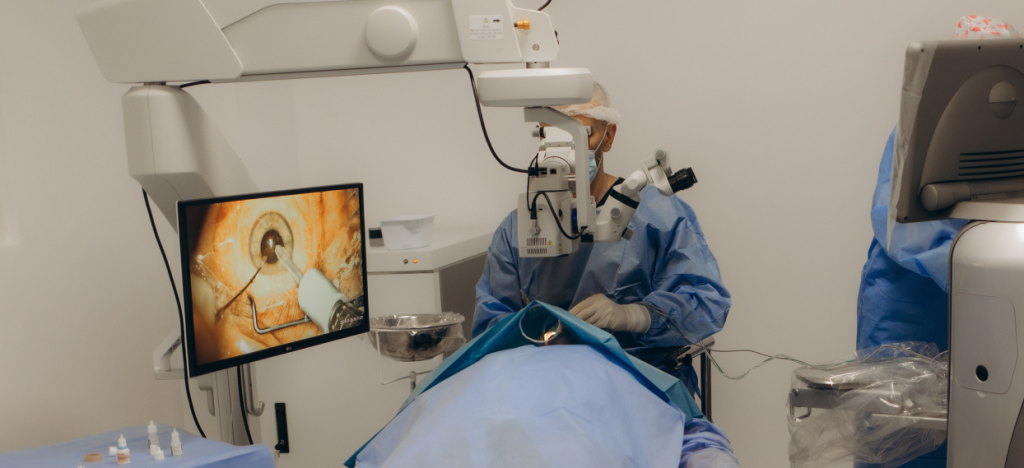
Cataract surgery is one of the most commonly performed eye procedures worldwide and is successfully carried out on millions of patients every year. Despite this, one of the most frequently asked questions before the operation is whether cataract surgery is painful and what can be felt during the process.
Modern cataract surgery is generally described as a painless procedure or one that involves only minimal discomfort. However, understanding what “painless” actually means, which sensations are considered normal, and what to expect after the procedure is important for both preparing for the surgery and managing the recovery period.
How Is Anesthesia Applied in Cataract Surgery?
Pain control in cataract surgery depends directly on the anesthesia method used. Today, there are three main approaches, and the preferred method is determined based on the patient’s overall condition and the surgeon’s evaluation.
Topical Anesthesia (Eye Drop Method)
Topical anesthesia, meaning anesthetic eye drops, is the most commonly used method in modern cataract surgery. A few drops of local anesthetic are applied to the eye before the procedure, numbing the surface layer and the front parts of the eye.
The patient remains awake during the surgery but does not feel pain. Since no injections are required, tissue trauma is minimized, and the recovery process is generally quicker.
Injection Anesthesia
In some cases, an anesthetic agent may be injected around or into the eye. This method provides deeper and more extensive numbness, temporarily immobilizing the eye muscles.
Compared to the topical method, this technique offers a wider area of anesthesia and is often preferred in more complex cases or when deemed appropriate by the surgeon.
Sedation and General Anesthesia
In addition to local anesthesia, a mild sedative (sedation) may be administered intravenously to help the patient relax. This approach is commonly used in individuals with higher levels of anxiety.
General anesthesia is rarely used in standard adult cataract surgery. However, it may be considered in cases involving severe anxiety, significant cognitive impairment, or difficulty with cooperation. In children, congenital cataract surgery is typically performed under general anesthesia.

What Is Felt During Cataract Surgery?
The most objective way to answer the question of whether cataract surgery is painful is to describe what is actually experienced during the procedure. Thanks to anesthesia, pain is largely prevented; however, certain sensations may still be perceived.
Commonly reported sensations during surgery include:
- A mild feeling of touch or pressure in the eye,
- A sense of coolness or wetness due to the saline solution used,
- The perception of bright, colorful lights caused by the surgical microscope and operating lights.
None of these sensations are painful. However, for individuals without prior surgical experience, they may feel unfamiliar. The surgical team typically explains the process in advance, and additional anesthesia can be provided if needed.
Are the Eyes Open During Cataract Surgery?
This is a common question, yet it is not always clearly explained. During the procedure, the eyelids are gently kept open with a special instrument. There is no need for the patient to consciously keep the eye open.
The visual experience can vary from person to person. Most commonly, a bright white light, color shades, or blurred shapes may be perceived. Seeing the surgeon’s hands or surgical instruments is highly unlikely, as the effect of anesthesia largely prevents such detailed perception.
Is There Pain After Cataract Surgery?
The question of whether cataract surgery is painful is not limited to the procedure itself. The postoperative period is also a topic many people are curious about.
Common and Expected Symptoms After Cataract Surgery
Shortly after the procedure, mild stinging, watering, or a foreign body sensation in the eye may occur. This is a natural response of the eye to surgery and typically subsides on its own within the first 24 to 48 hours.
Temporary sensitivity to light and mild blurred vision are also common during this period. While the timeline for visual clarity may vary, noticeable improvement is often observed by the end of the first week, with full recovery generally achieved within the first month.
Symptoms That Require Attention
Increasing or severe pain, pronounced redness, significant discharge, or sudden vision loss are not considered part of the normal healing process. These signs may indicate a possible complication and should be evaluated promptly by an eye care professional. Early assessment is essential to help prevent more serious outcomes.
Frequently Asked Questions
- Is pain felt during cataract surgery?
Pain is not expected during the procedure. With local anesthesia, the eye’s sensitivity to pain is largely blocked. Sensations such as pressure or coolness may be felt, but these are normal and not considered painful. - Are injections used in cataract surgery?
When topical (eye drop) anesthesia is used, no injections are required. If injection-based anesthesia is preferred, a local anesthetic is administered around the eye. The choice of method is determined by the eye care specialist. - Is the surgery performed while awake or under general anesthesia?
Standard cataract surgery is performed under local anesthesia while the patient is awake. If necessary, a mild sedative (sedation) may be added. General anesthesia is not typically preferred, except in specific cases. - How long does cataract surgery take?
Cataract surgery performed with the modern phacoemulsification (phaco) technique typically takes around 15 to 20 minutes. In most cases, patients are discharged on the same day.
For more information about cataract surgery, to explore treatment options, or to schedule an examination, consulting an eye care specialist is the most appropriate step.