06/Cornea and Keratoconus
Corneal Cross-Linking (CXL) Treatment
Cross-linking treatment for keratoconus, which strengthens the bonds between the collagen fibers of the cornea to halt the progression of the disease.
- Examination, surgery and follow-up with the same doctor
- Contracts with 7 private health insurers
- Bağdat Caddesi, Kadıköy


Short answer
Cross-linking (corneal collagen cross-linking) is a treatment that strengthens the fibers of the cornea using riboflavin (vitamin B2) drops and ultraviolet light. Its aim is to halt the progression of keratoconus; on its own, it is not enough to correct an existing glasses prescription. Early treatment is recommended when keratoconus is progressing.
What Is Corneal Cross-Linking (CXL)?
Corneal cross-linking is a treatment that makes the cornea more resilient, particularly in conditions such as keratoconus that weaken its structure. It aims to reinforce the biomechanical structure of the cornea and slow the progression of the disease.
During cross-linking, drops containing riboflavin (vitamin B2) are applied to the surface of the cornea, and the treated area is then exposed to ultraviolet A (UVA) light of a specific wavelength. This creates new bonds (cross-links) between the collagen fibers inside the cornea, making the corneal tissue firmer.
Known medically as “corneal collagen cross-linking”, this is a minimally invasive, tissue-sparing procedure that increases the stability of the cornea. It is usually recommended for progressive keratoconus, to support the structure of the cornea and to delay more advanced procedures such as a corneal transplant.
When Is Corneal Cross-Linking Used?
Corneal cross-linking (CXL) is used for progressive corneal diseases such as keratoconus, in which the corneal tissue thins, bulges forward and loses its normal shape. The aim is to stop the existing weakening from getting worse and to increase the cornea’s structural strength.
Cross-linking treatment is often recommended in the following situations:
- Early- and Moderate-Stage Keratoconus: When the disease shows a tendency to progress but has not yet reached an advanced stage, cross-linking is used to try to stabilize the cornea.
- Other Corneal Ectasias: In other conditions that affect the structure of the cornea, such as pellucid marginal degeneration or ectasia after refractive (laser vision correction) surgery, cross-linking may also be considered for suitable patients.
- When Glasses or Contact Lenses No Longer Give Adequate Vision: As the disease progresses, the cornea becomes more irregular. At this point, even though cross-linking does not correct the distorted shape, it aims to keep the structure from deteriorating further.
Corneal cross-linking is aimed less at improving vision than at preserving the existing corneal structure and halting progression. Timing is therefore very important, and the decision to treat is usually based on corneal topography and thickness measurements taken during the eye examination.
How Is Corneal Cross-Linking Performed?
Corneal cross-linking is usually performed as an outpatient procedure and does not require a surgical incision. The aim is to strengthen the cornea and slow the progression of the disease.
- 1. Anesthesia and Preparation:
First, anesthetic eye drops are applied to numb the eye, so the procedure itself is usually not painful. The surface of the cornea is then prepared. - 2. Removing the Epithelium:
In most cross-linking treatments, the epithelium, the outermost layer of the cornea, is removed so that riboflavin can penetrate the tissue more effectively. - 3. Applying Riboflavin:
Riboflavin (vitamin B2) drops are applied to the corneal surface at regular intervals. These drops make the cornea responsive to the ultraviolet light that will strengthen it. - 4. UVA Light Treatment:
Once the riboflavin has been absorbed, UVA light is applied to the cornea for a set period of time. The light interacts with the riboflavin to tighten the collagen fibers and strengthen the structure of the cornea. - 5. Healing:
After the procedure, the eye may be covered with a protective (bandage) contact lens, and you will need to use the medications prescribed by your doctor for several days. While the eye heals, it may feel sensitive and your vision may be slightly blurred.

Is Corneal Cross-Linking Suitable for Everyone?
Although corneal cross-linking is an effective option for most people with keratoconus, it may not be suitable for every eye. The decision should be made after a detailed eye examination and corneal measurements.
- Because UV light is used during cross-linking, the procedure may not be safe if the cornea is thinner than a certain limit. In that case, alternative treatments are considered.
- When the disease is very advanced and the cornea has become severely thin and misshapen, cross-linking alone may not be enough. In such cases, more advanced treatments such as intracorneal ring segments or a corneal transplant may be considered.
- If there is a corneal infection, severe dry eye or a systemic disease that could affect healing, the procedure may be postponed or not performed at all.
Does Cross-Linking Have Side Effects?
Cross-linking is generally considered a safe procedure, but some side effects can occur:
- Sensitivity and Blurred Vision:
In the first few days, you may notice mild discomfort, sensitivity to light and blurred vision. These symptoms ease over time. - Eye Redness:
The eye may become red after treatment. This is temporary and usually settles on its own within a few days. - Temporary Reduction in Vision:
Vision may be temporarily reduced after cross-linking, but this improves as healing progresses.
Recovery After Cross-Linking
Recovery after corneal cross-linking (CXL) treatment varies from person to person, but for most patients it is complete within a few weeks. During this time, a few simple rules help the eye heal well.
- Stinging and Light Sensitivity Are Normal in the First Days
For the first few days after the procedure, you may feel stinging, watering, sensitivity to light and mild pain. These complaints are usually temporary. If needed, you can take pain relievers recommended by your doctor. - Protective Contact Lens and Eye Drops
Some patients are fitted with a protective contact lens. Antibiotic and lubricating eye drops are also prescribed. Using these drops regularly for the recommended period is critical for healing. - Avoid Rubbing Your Eyes and Contact with Water
In the first weeks, rubbing your eyes, wearing makeup or swimming in pools or the sea is not recommended. Careful eye hygiene reduces the risk of infection. - Do Not Skip Follow-Up Visits
Attending check-ups at the intervals your doctor sets is important for monitoring how the cornea heals and for carrying out any additional treatment on time.
Is Corneal Cross-Linking Safe?
Corneal cross-linking is a treatment that has been used around the world for many years, and its safety is supported by clinical studies. It is used particularly in progressive corneal diseases such as keratoconus to slow the course of the disease.
- When it is performed by an experienced doctor on suitable patients, the risk of complications is low.
- The cross-linking procedure involves no incisions or stitches in the cornea, which keeps the surgical risk low.
- The procedure creates lasting structural changes in the corneal tissue. It therefore cannot be reversed, but when performed on the right patient at the right time, it can provide a long-term protective effect.
One of the treatments that can help slow the progression of keratoconus is corneal cross-linking (CXL).
If you would like detailed information about this treatment and to book an initial evaluation, you can reach the practice by phone, WhatsApp or the appointment form.
The information on this page is for general information only and does not replace diagnosis or treatment. In any surgical or interventional procedure, results vary from person to person. Please get a detailed opinion from your doctor before any procedure.
Cornea and Keratoconus options
Related treatment pages

Keratoconus
Treatments for keratoconus, a condition in which the cornea thins and bulges forward into a cone, aimed at halting its progression and improving vision.
View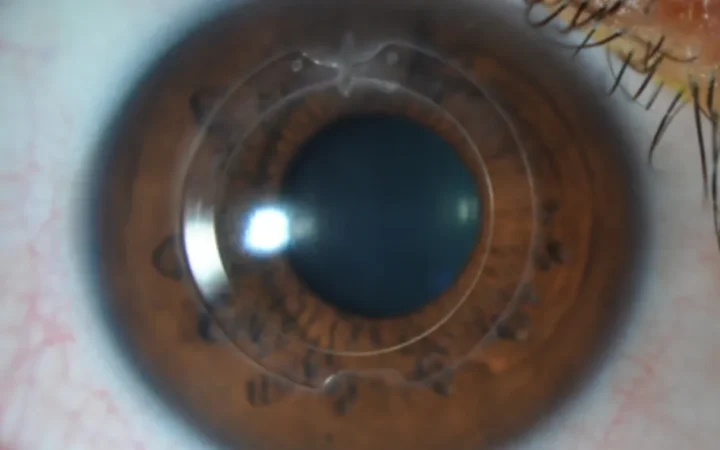
Intracorneal Ring Segments
Thin ring segments (Intacs) placed inside the cornea to improve its shape in keratoconus and irregular astigmatism.
View
Cornea Treatments
Diagnosis and treatment for the clear front layer of the eye, including corneal infections, keratoconus, dry eye and corneal transplant.
ViewFrequently asked questions
Cross-Linking: frequently asked questions
If you have another question, you can message us on WhatsApp.
How Many Sessions Does Cross-Linking Take?
In most cases, cross-linking is performed in a single session. Depending on the patient, the effect of one session can last for several years.
Is Cross-Linking Painful?
Anesthetic eye drops are used during the treatment, so the procedure itself is usually not painful. You may feel some mild discomfort afterwards.

Your doctor
Op. Dr. Murat Ün
He graduated from Trakya University Faculty of Medicine and completed his ophthalmology residency at Fatih Sultan Mehmet Training and Research Hospital. From 2004 to 2016 he worked at Dünyagöz Hospital in Ataköy, then at Medical Park and Batıgöz. Since 2021 he has been seeing patients at his own practice on Bağdat Caddesi.
- Education
Trakya University Faculty of Medicine
- Residency
Fatih Sultan Mehmet Training and Research Hospital, Ophthalmology
- 2001–2004
Yaşar Okuyan SSK Hospital
- 2004–2016
Dünyagöz Hospital, Ataköy
- 2016–2018
Medical Park Hospital
- 2018–2021
Batıgöz Health Group, Altunizade
- 2021 →
Own practice · Bağdat Caddesi, Kadıköy
Contracted insurers
Examination with your private health insurance
Before your appointment we confirm together what your policy covers for Cross-Linking. Coverage and any co-payment depend on your insurer’s approval.
- 01
 Allianz SigortaContracted
 - 02
 Anadolu SigortaContracted
 - 03
 SencardContracted
 - 04
 Türkiye SigortaContracted
 - 05
 MAPFRE SigortaContracted
 - 06
 Medisa SigortaContracted
 - 07
 AXA SigortaContracted
 - Insurer not on the list?Share your policy details and we will look at reimbursement options together.Ask on WhatsApp

