01/Smart Lenses (Trifocal)
EDOF Lens Surgery (Extended Depth of Focus Lenses)
EDOF intraocular lenses give a continuous range of focus from distance to intermediate and are considered especially for people who value comfortable night vision.
- Examination, surgery and follow-up with the same doctor
- Contracts with 7 private health insurers
- Bağdat Caddesi, Kadıköy

Short answer
An EDOF (extended depth of focus) lens is an intraocular lens that creates a continuous range of focus at distance and intermediate range. Halos around lights may be less noticeable than with trifocal lenses; low-power reading glasses may be needed for very close reading. The choice is based on your visual habits and eye measurements.
What Is an EDOF Smart Lens?
EDOF stands for “Extended Depth of Focus.” This technology was developed to provide more continuous, clear vision across a range of distances.
Unlike conventional multifocal intraocular lenses, which split light between separate focal points, EDOF smart lenses create a single, extended focal range. For many people, this gives vision that feels more natural and clear.
EDOF technology stands out especially for improving the quality of intermediate vision. This can make everyday tasks such as using a computer, reading a phone screen or checking product labels in a shop more comfortable.
In modern cataract surgery, or for patients who hope to be largely independent of glasses, EDOF smart lenses can be used with personalized planning. Each treatment should be assessed individually.
Who Can Have EDOF Smart Lens Surgery?
EDOF smart lens surgery uses an advanced intraocular lens technology that aims to provide clear vision at different distances. It may be a particularly suitable option for:
- People who depend on glasses, usually aged 45 and over
For people who have trouble seeing at near, intermediate and far distances, EDOF lens technology can help improve visual comfort. - Patients diagnosed with cataract
In eyes where the natural lens has become cloudy because of cataract, an EDOF lens can help restore the quality of vision. - People looking for an alternative to multifocal or trifocal lenses
EDOF lenses can be considered for people who want a more natural, continuous range of focus rather than the type of vision that conventional multifocal lenses provide.
Every person’s eyes and visual needs are different. To find out whether an EDOF lens is right for you, a detailed eye examination and a specialist opinion are needed. An individual assessment makes it possible to plan the right treatment.
How Does EDOF Smart Lens Surgery Affect Vision Quality?
EDOF smart lenses are special lenses developed to make vision more balanced across distances, rather than sharp at only one. They can be a real convenience, especially for people who are tired of constantly putting glasses on and taking them off to look at a computer screen and then at their phone.
Seeing more clearly when driving at night or in dim light may also be one of the advantages of these lenses. Some people experience less glare and light scatter, but this does not mean every eye will have the same result. How well the lens suits your eye is the deciding factor.
Many people say they need to wear glasses less during the day with these lenses. Of course, this is very individual. A detailed examination is how you can find out how much you are likely to benefit.
How Is EDOF Lens Surgery Performed?
EDOF smart lens surgery is usually carried out in a way similar to cataract surgery. What matters here is a careful assessment of each patient’s eye, because this technology is not applied in the same way to everyone; it requires individual planning.
The treatment process is as follows:
- It starts with an examination and measurements: Before the procedure, biometry measurements of the eye are taken and the cornea is assessed in detail. This is how the suitable type of lens is chosen.
- It continues with a short surgical procedure: The eye is numbed with local anesthesia and the EDOF lens is placed inside the eye. The procedure usually takes 10–20 minutes, and stitches are often not needed.
- Recovery is usually quick: Patients can often go home the same day. Vision usually begins to clear within a few days.
During recovery, using the drops your doctor recommends regularly, paying attention to eye hygiene and not missing follow-up appointments are important for a good outcome.
What Are the Advantages of an EDOF Smart Lens?
EDOF (Extended Depth of Focus) smart lenses increase the depth of focus with the aim of giving more continuous vision across different distances. This lens technology can offer important advantages, especially for patients who want clear vision at intermediate and, to some extent, near distances.

The main advantages of EDOF lenses are:
- Natural depth of focus: A smoother transition between distances may be possible, often without glasses. This adds comfort in everyday activities such as using a computer, reading or driving.
- Less dependence on glasses: Some patients report a marked reduction in their need for glasses with this technology. How far you can expect to be free of glasses varies from person to person.
- Long-term clear vision: Intraocular lenses are generally designed to stay in the eye for life. This can provide stable vision quality over time.
- Careful patient selection: The benefit you can expect from an EDOF lens depends on careful patient selection. Not every eye is suitable for this technology, so a detailed assessment before the procedure is important.
EDOF Smart Lenses Compared with Other Lens Types
EDOF smart lenses are made with advanced technology and aim to give more natural vision when you shift focus. Compared with other lens types, the main differences are:
- Compared with monofocal lenses:
Monofocal lenses give clear vision at only one distance (usually far). EDOF lenses, by contrast, offer a wider range of clear vision at distance and intermediate range, which can reduce the need for glasses. - Compared with trifocal lenses:
Trifocal lenses aim to provide vision at three distances (near, intermediate and far), but some people may notice glare and halos around lights at night. EDOF lenses have the potential to cause fewer of these effects. - Night vision:
Because there is less light scatter in dim light, EDOF lenses can offer more comfort in situations such as night driving.
Each lens has its own advantages; the most suitable option should be decided by a specialist assessment.
What to Keep in Mind After Treatment
After EDOF smart lens surgery, a few points help your recovery go smoothly:
- Hygiene and eye care: Avoid touching your eyes in the first days, and do not touch the area around your eyes without washing your hands.
- Follow-up appointments: Attending your check-ups on the dates your doctor gives you is important for a smooth recovery.
- Medication and eye drops: Use your eye drops regularly, exactly as prescribed.
- Daily life: In the first days, take precautions such as limiting screen time that tires your eyes and avoiding dusty environments.
Because recovery is different for everyone, following your doctor’s advice carefully is the right approach.
The information on this page is for general information only and does not replace diagnosis or treatment. In any surgical or interventional procedure, results vary from person to person. Please get a detailed opinion from your doctor before any procedure.
Smart Lenses (Trifocal) options
Related treatment pages
Smart Lenses
Trifocal, EDOF, multifocal and toric intraocular lenses. The right lens for you is chosen based on your eye measurements and your everyday visual habits.
View
Trifocal Lens
An intraocular lens with three focal points for near, intermediate and distance vision, planned to reduce the need for glasses with cataract or age-related near-vision loss.
View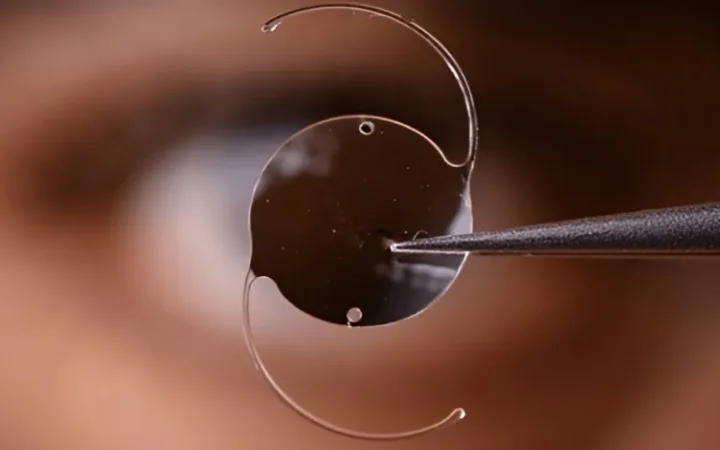
Multifocal Lens
Multifocal intraocular lenses that support both distance and near vision: an option in cataract and presbyopia treatment.
View
Toric Lens (Astigmatism)
Toric intraocular lenses designed to correct astigmatism at the same time as cataract surgery or lens replacement in eyes that have astigmatism.
View
ICL Phakic Lens
For high nearsightedness, farsightedness or astigmatism, an ICL phakic lens is added to the eye without removing the natural lens; an option for eyes not suited to laser.
ViewFrequently asked questions
EDOF Lens: frequently asked questions
If you have another question, you can message us on WhatsApp.
EDOF or trifocal lens?
A trifocal lens offers three focal points for near, intermediate and distance vision; an EDOF lens gives a continuous range of focus from distance to intermediate, and halos around lights may be less noticeable. A trifocal lens may suit people who read a lot, while an EDOF lens may suit people who drive at night; the choice is made together during your examination.
Will I need reading glasses with an EDOF lens?
Intermediate distances and larger print can usually be read without glasses; for small print and longer periods of reading, low-power reading glasses may be needed.

Your doctor
Op. Dr. Murat Ün
He graduated from Trakya University Faculty of Medicine and completed his ophthalmology residency at Fatih Sultan Mehmet Training and Research Hospital. From 2004 to 2016 he worked at Dünyagöz Hospital in Ataköy, then at Medical Park and Batıgöz. Since 2021 he has been seeing patients at his own practice on Bağdat Caddesi.
- Education
Trakya University Faculty of Medicine
- Residency
Fatih Sultan Mehmet Training and Research Hospital, Ophthalmology
- 2001–2004
Yaşar Okuyan SSK Hospital
- 2004–2016
Dünyagöz Hospital, Ataköy
- 2016–2018
Medical Park Hospital
- 2018–2021
Batıgöz Health Group, Altunizade
- 2021 →
Own practice · Bağdat Caddesi, Kadıköy
Contracted insurers
Examination with your private health insurance
Before your appointment we confirm together what your policy covers for EDOF Lens. Coverage and any co-payment depend on your insurer’s approval.
- 01
 Allianz SigortaContracted
 - 02
 Anadolu SigortaContracted
 - 03
 SencardContracted
 - 04
 Türkiye SigortaContracted
 - 05
 MAPFRE SigortaContracted
 - 06
 Medisa SigortaContracted
 - 07
 AXA SigortaContracted
 - Insurer not on the list?Share your policy details and we will look at reimbursement options together.Ask on WhatsApp

