01/Smart Lenses (Trifocal)
Multifocal Intraocular Lens (IOL) Surgery
Multifocal intraocular lenses that support both distance and near vision: an option in cataract and presbyopia treatment.
- Examination, surgery and follow-up with the same doctor
- Contracts with 7 private health insurers
- Bağdat Caddesi, Kadıköy


Short answer
A multifocal lens distributes light to more than one focal point, so a single lens supports both distance and near vision. It is used in cataract surgery or refractive lens exchange. It is considered for people whose retina and cornea are healthy and who want to reduce their need for glasses.
What Is a Multifocal Intraocular Lens?
Multifocal intraocular lenses (multifocal IOLs) are specially designed lenses that aim to provide clear vision both near and far for people having cataract surgery or people with age-related difficulty seeing up close (presbyopia). These lenses replace the natural lens and remain in the eye once implanted.
Multifocal lenses contain rings or optical zones that make it possible to focus at different distances. Thanks to these rings, the eye can adapt to both distance and near vision at the same time. This means many patients can read, work on a computer or drive in daily life, often without glasses.
How Is It Different from a Monofocal Lens?
Monofocal intraocular lenses can focus at only one distance. This is usually set for distance vision, and reading glasses are needed to see up close.
Multifocal lenses have more than one focal point. This can remove the need to wear separate glasses for distance and near. In summary:
| Monofocal Intraocular Lens | Multifocal Intraocular Lens |
| Single focus (usually distance). | More than one focus (distance, intermediate and near). |
| Glasses are needed for near vision. | Life without glasses may be possible. |
| Used in cataract surgery. | For cataract patients and people who want to manage without glasses. |
| Clear vision at one distance | Clear vision at more than one distance. |
When Is a Multifocal Lens Preferred?
Multifocal intraocular lens surgery can be a good solution for patients who want to improve their vision and reduce their dependence on glasses.
However, it is not suitable for every patient, so the decision is made after a detailed examination by your eye doctor. Multifocal intraocular lenses are often preferred in the following situations:
During Cataract Surgery
A cataract is a common eye condition in which the eye’s lens loses its transparency, causing blurred vision. During cataract surgery, the clouded natural lens is removed and replaced with an artificial intraocular lens. At this point, if the patient wants clear vision at both distance and near, multifocal lenses are a strong alternative.
With these lenses, the cataract is treated and, in addition, overall vision quality can improve and the need for glasses in daily life can be considerably reduced.
Presbyopia (Age-Related Near Vision Loss)
Presbyopia is the loss of clear near vision that usually begins after age 40, as the eye’s lens loses its flexibility. Reading glasses only compensate for this while you are wearing them, whereas multifocal intraocular lens surgery offers a long-term solution.
This treatment can offer real practical and cosmetic advantages, especially for people with active lifestyles who prefer not to wear glasses.
People Who Want Clear Vision Both Near and Far
Some patients do not like wearing glasses, or their work requires them to keep focusing at different distances. Teachers, drivers, architects and people who spend long hours in front of a screen, for example, all do tasks that need clear vision both near and far.
In such cases, multifocal lenses can improve quality of life by allowing quick, clear shifts between distances. For patients who strongly want to be free of glasses, multifocal treatment can offer an advantage that directly affects their lifestyle.
How Is Multifocal Intraocular Lens Surgery Performed?
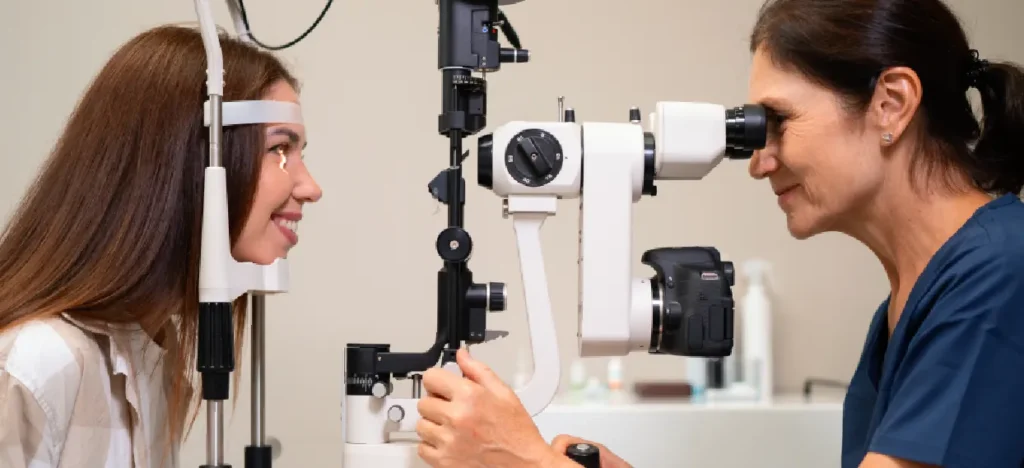
In multifocal intraocular lens surgery, the eye’s clouded natural lens is removed and replaced with a special artificial lens designed to provide clear vision at both distance and near.
The procedure is usually performed under local anesthesia (given as numbing eye drops), and most patients feel little discomfort during it. It is quick, usually taking 10–20 minutes per eye.
Patients usually go home the same day, so there is no need to stay in hospital. After a short recovery period supported by eye drops, patients can gradually return to their daily routine. Your doctor will explain in detail what to watch for after treatment.
An important point to remember is that the lens type and surgical method are chosen individually for each patient. That is why a detailed eye examination and specialist assessment before the procedure are so important.
What Are the Advantages of Multifocal Intraocular Lens Surgery?
Multifocal intraocular lens surgery does more than address vision problems; it also offers a level of comfort that directly affects patients’ quality of life. It has several advantages for people who want to reduce their dependence on glasses, lead an active lifestyle or want clear vision at both distance and near:
- One of the most noticeable advantages of multifocal lenses is that they can considerably reduce the need for glasses. Patients can go about their daily activities without having to carry separate glasses for reading and for distance.
- Thanks to their special design, which allows focusing at different distances, multifocal lenses are designed to give clear vision both far and near.
- Patients usually go home the same day, and recovery is short. Most patients can return to their daily routine within a few days.
- Clearer, more continuous vision directly affects quality of life. Visual comfort can noticeably improve in many areas, from social life and work to daily habits and hobbies.
Who Is Not a Candidate for Multifocal Intraocular Lenses?
Although multifocal intraocular lenses open the door to clear vision without glasses for many patients, not every eye or health condition is suitable for this treatment. A detailed eye examination determines which patients are likely to benefit.
Multifocal lenses are generally not recommended in the following situations:
- People with Disease of the Retina or Macula: In diseases that affect the back of the eye, including the macula (the central part of the retina), light may not be focused clearly. This can limit the benefit of multifocal vision.
- People with High Astigmatism: In patients with high astigmatism, standard multifocal lenses may not give the clarity they want. These patients may need special lenses with a toric (astigmatism-correcting) design.
- People with Neurological Vision Problems or Who May Find It Hard to Adapt: In some people, the brain may find it difficult to adapt to the new way of seeing. This is taken into account especially in people who have had problems with visual perception in the past or who have a neurological condition.
Recovery After Treatment and What to Keep in Mind
Recovery after multifocal intraocular lens surgery is usually quick and comfortable. Still, a few points help it go smoothly. Following your doctor’s advice supports your vision quality and helps reduce the risk of complications.
- In the first days after the procedure, you may notice mild blurring, reflections of light or a slight waviness in your vision. This is part of the eye adapting to the new lens and usually fades within a few days to a few weeks.
- Use the antibiotic and steroid (cortisone) eye drops prescribed by your doctor regularly, to reduce the risk of infection and support healing.
- For the first week, avoid rubbing your eye, touching it with unwashed hands, and swimming in pools or the sea.
- In the first days after treatment, heavy lifting, bending over and sudden movements are not recommended, as they can affect the pressure inside the eye.
- Check-ups after one week, after one month and later if needed are essential for monitoring your recovery and the condition of the intraocular lens.
Multifocal intraocular lens surgery can help you see clearly both near and far.
To learn more about multifocal lenses and book an initial examination, you can contact the practice by phone, WhatsApp or the appointment form.
The information on this page is for general information only and does not replace diagnosis or treatment. In any surgical or interventional procedure, results vary from person to person. Please get a detailed opinion from your doctor before any procedure.
Smart Lenses (Trifocal) options
Related treatment pages

Smart Lenses
Trifocal, EDOF, multifocal and toric intraocular lenses. The right lens for you is chosen based on your eye measurements and your everyday visual habits.
View
Trifocal Lens
An intraocular lens with three focal points for near, intermediate and distance vision, planned to reduce the need for glasses with cataract or age-related near-vision loss.
View
EDOF Lens
EDOF intraocular lenses give a continuous range of focus from distance to intermediate and are considered especially for people who value comfortable night vision.
View
Toric Lens (Astigmatism)
Toric intraocular lenses designed to correct astigmatism at the same time as cataract surgery or lens replacement in eyes that have astigmatism.
View
ICL Phakic Lens
For high nearsightedness, farsightedness or astigmatism, an ICL phakic lens is added to the eye without removing the natural lens; an option for eyes not suited to laser.
ViewFrequently asked questions
Multifocal Lens: frequently asked questions
If you have another question, you can message us on WhatsApp.
How Long Does Multifocal Lens Surgery Take?
Multifocal lens surgery usually takes 10–20 minutes, and patients can usually go home the same day.
When Is Good Vision Reached After Multifocal Lens Surgery?
Most patients have clear vision within a few days of multifocal lens surgery.
Which Age Group Are Multifocal Lenses Suitable For?
Multifocal lenses are usually considered for people aged 45 and over with age-related vision problems such as presbyopia or cataract. Suitability depends on the results of your eye examination rather than on age alone.

Your doctor
Op. Dr. Murat Ün
He graduated from Trakya University Faculty of Medicine and completed his ophthalmology residency at Fatih Sultan Mehmet Training and Research Hospital. From 2004 to 2016 he worked at Dünyagöz Hospital in Ataköy, then at Medical Park and Batıgöz. Since 2021 he has been seeing patients at his own practice on Bağdat Caddesi.
- Education
Trakya University Faculty of Medicine
- Residency
Fatih Sultan Mehmet Training and Research Hospital, Ophthalmology
- 2001–2004
Yaşar Okuyan SSK Hospital
- 2004–2016
Dünyagöz Hospital, Ataköy
- 2016–2018
Medical Park Hospital
- 2018–2021
Batıgöz Health Group, Altunizade
- 2021 →
Own practice · Bağdat Caddesi, Kadıköy
Contracted insurers
Examination with your private health insurance
Before your appointment we confirm together what your policy covers for Multifocal Lens. Coverage and any co-payment depend on your insurer’s approval.
- 01
 Allianz SigortaContracted
 - 02
 Anadolu SigortaContracted
 - 03
 SencardContracted
 - 04
 Türkiye SigortaContracted
 - 05
 MAPFRE SigortaContracted
 - 06
 Medisa SigortaContracted
 - 07
 AXA SigortaContracted
 - Insurer not on the list?Share your policy details and we will look at reimbursement options together.Ask on WhatsApp

